Lumberton Commercial Historic District

Why it's listed
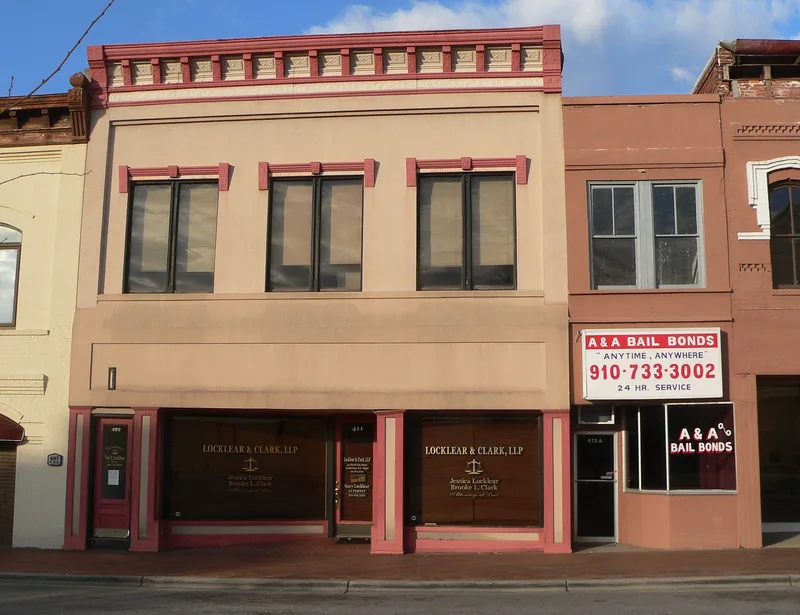
Downtown Lumberton's commercial core, centered on Elm and Chestnut streets and the numbered cross streets from First to Fifth, holds buildings dating from about 1840 to 1941. Most were built between 1890 and 1920, when the town grew rapidly. The Lumber River, an early route for produce and timber, drew the first businesses, and the railroad that arrived in 1860 later shifted the center of trade toward Elm Street. Fires in 1870 and 1876 destroyed most early frame buildings, so brick replaced them. The district includes the c. 1840 Proctor Law Office, the oldest extant structure in town, and the 1879 McLeod Building, remodeled in 1905. Banks display Renaissance and Neo-Classical Revival designs, while many small buildings carry elaborate corbeled brickwork by unknown masons. Gas stations in Spanish Mission and Tudor Revival styles, an Art Moderne shop, tobacco warehouses and the rebuilt depot add variety. Of 90 resources, 67 contribute to the district's character; metal-clad facades account for many of the non-contributing buildings.
Machine-generated summary. This summary was generated by a language model from the official nomination document and has not been reviewed line by line by an editor. It may contain errors. Check the source document before relying on any detail. Source: nomination document (PDF) · catalog entry. Generated October 2026 (model claude-sonnet-5-5, prompt v1.0-2026-10-29).
| Styles | Commercial style; Classical Revival (also Renaissance Revival, Neo-Classical Revival, Colonial Revival, Spanish Colonial Revival, Tudor Revival, Art Moderne and vernacular brick) |
|---|---|
| Areas of significance | Commerce, Transportation, Architecture |
| Acreage | 21.5 |
| Boundary source | NPS cultural-resource GIS polygon |
| Full listing page | Lumberton Commercial Historic District (property record) |
What listing means for this property
This is a historic district. Buildings within its boundary are either contributing (they add to the district's significance) or non-contributing. Owners of contributing income-producing buildings can claim the 20% federal rehabilitation tax credit; homeowners should look at state credits. National Register districts impose no design review by themselves; a local historic district ordinance, if one exists, does (the difference explained).
General information, not legal or tax advice. Rules change; confirm with your State Historic Preservation Office or a qualified adviser.