Halifax Historic District
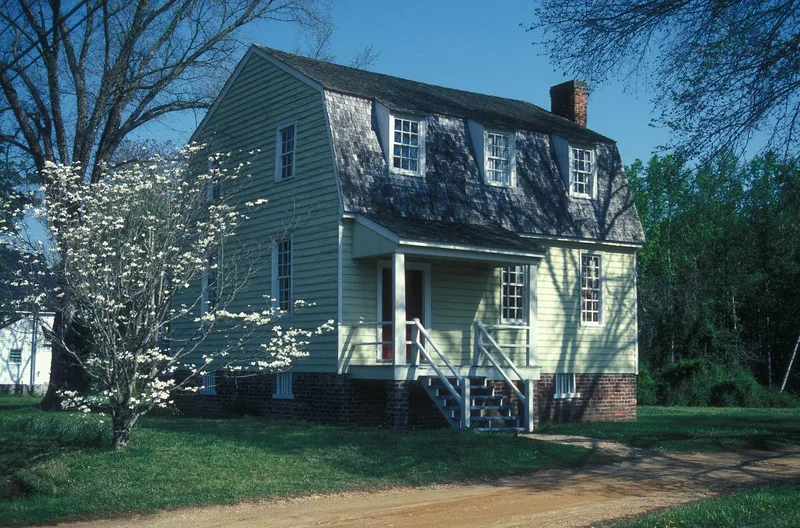

Why it's listed
Halifax was a planned colonial river town on the Roanoke, chartered in 1757 and laid out in 1758 on a grid running perpendicular to the river. It grew into a major center of trade, courts and politics, with taverns, warehouses and more than sixty substantial houses. Here the Fourth Provincial Congress adopted the Halifax Resolves in April 1776, and the Fifth Provincial Congress drafted North Carolina's first constitution that December. After the Revolution the town declined as the population moved west and the railroad bypassed it. Today most of the old town site is lawn or woodland, and four historic buildings remain: the Constitution House (ca. 1770), the Owens House (ca. 1760), the Clerk's Office (ca. 1832) and the Jail (ca. 1838). The district is also valued for its archaeological potential, which allows study of how material culture changed in a stable early American town.
Machine-generated summary. This summary was generated by a language model from the official nomination document and has not been reviewed line by line by an editor. It may contain errors. Check the source document before relying on any detail. Source: nomination document (PDF) · catalog entry. Generated October 2026 (model claude-sonnet-5-5, prompt v1.0-2026-10-29).
| Period of significance | 18th and 19th centuries |
|---|---|
| Styles | Gambrel-roofed 18th-century house; Gothic/Romantic Revival (Clerk's Office); plain frame and brick public buildings |
| Areas of significance | Commerce, Politics/Government, Architecture |
| Acreage | 50 |
| Boundary source | NPS cultural-resource GIS polygon |
| Full listing page | Halifax Historic District (property record) |
What listing means for this property
This is a historic district. Buildings within its boundary are either contributing (they add to the district's significance) or non-contributing. Owners of contributing income-producing buildings can claim the 20% federal rehabilitation tax credit; homeowners should look at state credits. National Register districts impose no design review by themselves; a local historic district ordinance, if one exists, does (the difference explained).
General information, not legal or tax advice. Rules change; confirm with your State Historic Preservation Office or a qualified adviser.