Fulton Heights Historic District

Why it's listed
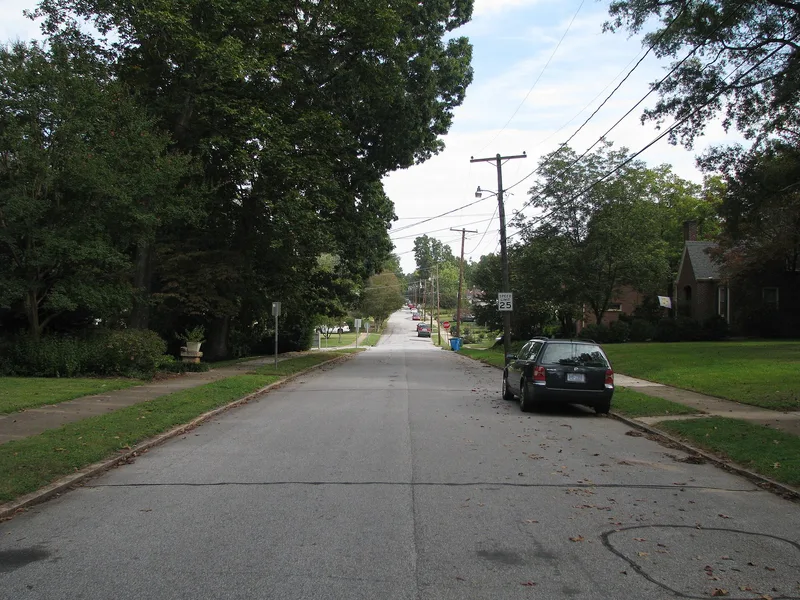
Fulton Heights is a residential district of about a few hundred early twentieth-century houses on grid streets roughly a mile south of downtown Salisbury, North Carolina. The Southern Development Company laid it out beginning in 1902, and in 1904 the streetcar line was extended west along Mitchell Avenue to serve it. Deep, narrow fifty-foot lots, rear service alleys and a small amusement park, which operated from 1906 until 1918, were part of the original plan. The houses span the period from 1903 through the 1940s and range from Queen Anne cottages and Colonial Revival houses to Craftsman bungalows, Tudor Revival cottages and Prairie School four-squares. Institutional landmarks include the 1913 Second Reformed Presbyterian Church, the 1939 First Associated Reformed Presbyterian Church and the 1916 Calvin H. Wiley School. The district is significant for its intact planning and its range of residential architecture from Salisbury's growth period, including houses by known architects such as Percy Bloxam and Frank Joseph Forster.
Machine-generated summary. This summary was generated by a language model from the official nomination document and has not been reviewed line by line by an editor. It may contain errors. Check the source document before relying on any detail. Source: nomination document (PDF) · catalog entry. Generated October 2026 (model claude-haiku-5-5, prompt v1.1-2026-10-29).
| Period of significance | 1903-1948 |
|---|---|
| Styles | Colonial Revival; Bungalow/Craftsman; Tudor Revival; Queen Anne; Dutch Colonial Revival; Spanish Colonial Revival; Prairie School; Gothic Revival; Neo-Classical Revival |
| Areas of significance | Architecture, Community Planning and Development |
| Acreage | 122 |
| Boundary source | NPS cultural-resource GIS polygon |
| Full listing page | Fulton Heights Historic District (property record) |
What listing means for this property
This is a historic district. Buildings within its boundary are either contributing (they add to the district's significance) or non-contributing. Owners of contributing income-producing buildings can claim the 20% federal rehabilitation tax credit; homeowners should look at state credits. National Register districts impose no design review by themselves; a local historic district ordinance, if one exists, does (the difference explained).
General information, not legal or tax advice. Rules change; confirm with your State Historic Preservation Office or a qualified adviser.