Elizabeth City Historic District (Additional Documentation)

Why it's listed
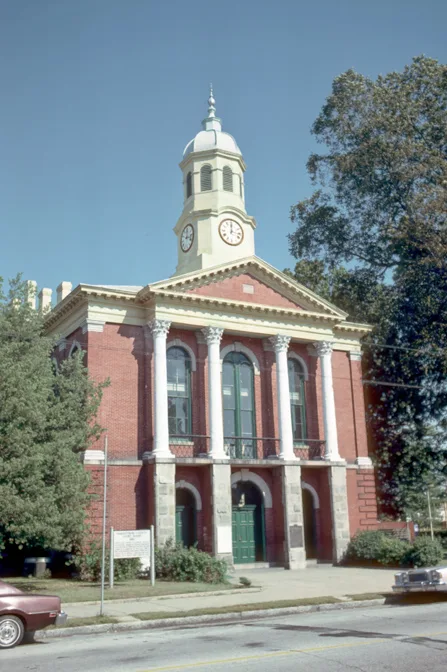
Elizabeth City's historic district covers about thirty blocks between the Pasquotank River and the post-1920 suburbs to the west. Main Street runs through its center, linking the downtown business area with Victorian residential streets. The oldest known building is the Grice-Fearing House, built between 1789 and 1808 and enlarged in 1840. Eight Greek Revival houses from about 1834 to 1863 survive, most with side-hall plans and distinctive acorn-capped stair newels. Seven antebellum commercial buildings cluster along South Road Street and the first block of East Main, among them the Cobb Building, which combines a store and a residential wing. The town prospered after the Dismal Swamp Canal was deepened in 1826-1828, becoming a shipbuilding and trading port with ties to Norfolk and the West Indies. A competing canal completed in 1859 and the Civil War, including a naval battle nearby in 1862, ended that boom and stalled growth for about twenty years.
Machine-generated summary. This summary was generated by a language model from the official nomination document and has not been reviewed line by line by an editor. It may contain errors. Check the source document before relying on any detail. Source: nomination document (PDF) · catalog entry. Generated October 2026 (model claude-sonnet-5-5, prompt v1.0-2026-10-29).
| Styles | Georgian, Federal, Greek Revival, Gothic Revival, Italianate, Queen Anne and Colonial Revival |
|---|---|
| Areas of significance | Social History, Architecture, Politics/Government, Industry |
| Acreage | 9 |
| Boundary source | NPS cultural-resource GIS polygon |
| Full listing page | Elizabeth City Historic District (Additional Documentation) (property record) |
What listing means for this property
This is a historic district. Buildings within its boundary are either contributing (they add to the district's significance) or non-contributing. Owners of contributing income-producing buildings can claim the 20% federal rehabilitation tax credit; homeowners should look at state credits. National Register districts impose no design review by themselves; a local historic district ordinance, if one exists, does (the difference explained).
General information, not legal or tax advice. Rules change; confirm with your State Historic Preservation Office or a qualified adviser.