College Hill Historic District

Why it's listed
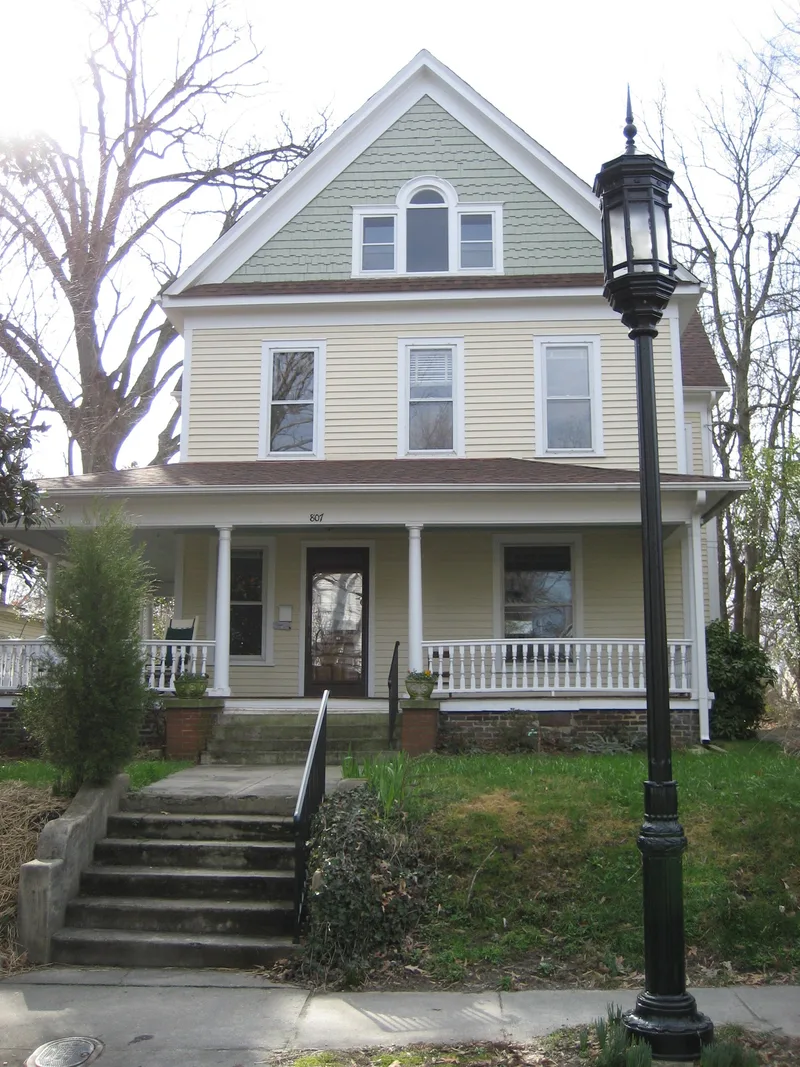
College Hill is a residential district on a gentle rise just west of downtown Greensboro, North Carolina. Its streets hold roughly 387 resources, most of them frame houses set close together on narrow urban lots with shallow lawns and mature shade trees. Development began around the Greensboro Female College, which opened on land purchased in 1837, and accelerated after the 1891 extension of city limits and the 1892 opening of the state Normal and Industrial School for White Girls. The Walker-Scarborough House, dating from about 1845, is among the earliest surviving dwellings. The district holds one of the largest groups of Queen Anne and transitional Queen Anne/Colonial Revival houses in the city, built mostly in the 1890s and 1900s. Later bungalows and Craftsman and Colonial Revival foursquares followed in the 1910s and 1920s. Its growth tracks the arrival of the electric streetcar around 1902 and the paving of its streets.
Machine-generated summary. This summary was generated by a language model from the official nomination document and has not been reviewed line by line by an editor. It may contain errors. Check the source document before relying on any detail. Source: nomination document (PDF) · catalog entry. Generated October 2026 (model claude-haiku-5-5, prompt v1.1-2026-10-29).
| Period of significance | 1837-1941 |
|---|---|
| Styles | Queen Anne; Colonial Revival; Craftsman; Bungalow; Foursquare; Tudor Revival; Greek Revival; Italianate; Spanish Colonial Revival |
| Areas of significance | Architecture, Community Planning and Development |
| Acreage | 72 |
| Boundary source | NPS cultural-resource GIS polygon |
| Full listing page | College Hill Historic District (property record) |
What listing means for this property
This is a historic district. Buildings within its boundary are either contributing (they add to the district's significance) or non-contributing. Owners of contributing income-producing buildings can claim the 20% federal rehabilitation tax credit; homeowners should look at state credits. National Register districts impose no design review by themselves; a local historic district ordinance, if one exists, does (the difference explained).
General information, not legal or tax advice. Rules change; confirm with your State Historic Preservation Office or a qualified adviser.