Carolina Heights Historic District

Why it's listed
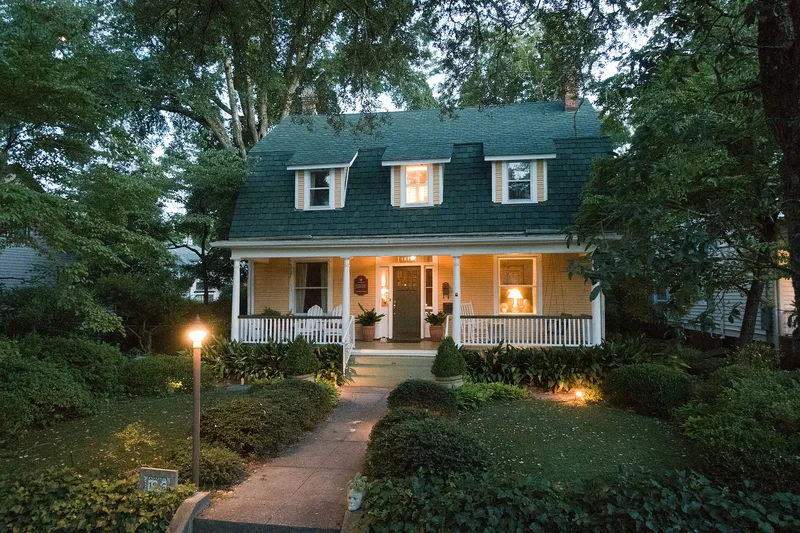
Carolina Heights Historic District covers roughly twenty-six blocks and eighty acres east of downtown Wilmington. It combines two neighborhoods developed at about the same time: Carolina Heights, begun in 1908 under the leadership of Mary Bridgers as a suburb for prominent residents and a future Christian Science church, and Winoca Terrace, laid out in 1911 by Thomas H. Wright of J. G. Wright and Sons. Trolley lines linked both to downtown and Wrightsville Beach. The streets follow a grid, with wide sidewalks, brick walls, wrought-iron fences and mature azaleas, camellias and shade trees. Houses from the first three decades of the twentieth century include Neoclassical Revival, Georgian and Colonial Revival, English cottages, bungalows and Prairie-style designs by architect Burett Stephens. Service alleys and early garages record the arrival of the automobile. Institutional buildings include New Hanover County High School, Trinity Methodist Episcopal Church, St. Paul's Episcopal Church and First Church of Christ, Scientist. Most buildings remain remarkably intact.
Machine-generated summary. This summary was generated by a language model from the official nomination document and has not been reviewed line by line by an editor. It may contain errors. Check the source document before relying on any detail. Source: nomination document (PDF) · catalog entry. Generated October 2026 (model claude-sonnet-5-5, prompt v1.0-2026-10-29).
| Styles | Neoclassical Revival, Colonial Revival, Craftsman |
|---|---|
| Areas of significance | Architecture, Community Planning and Development |
| Acreage | 80 |
| Boundary source | NPS cultural-resource GIS polygon |
| Full listing page | Carolina Heights Historic District (property record) |
What listing means for this property
This is a historic district. Buildings within its boundary are either contributing (they add to the district's significance) or non-contributing. Owners of contributing income-producing buildings can claim the 20% federal rehabilitation tax credit; homeowners should look at state credits. National Register districts impose no design review by themselves; a local historic district ordinance, if one exists, does (the difference explained).
General information, not legal or tax advice. Rules change; confirm with your State Historic Preservation Office or a qualified adviser.