Beaufort Historic District

Why it's listed
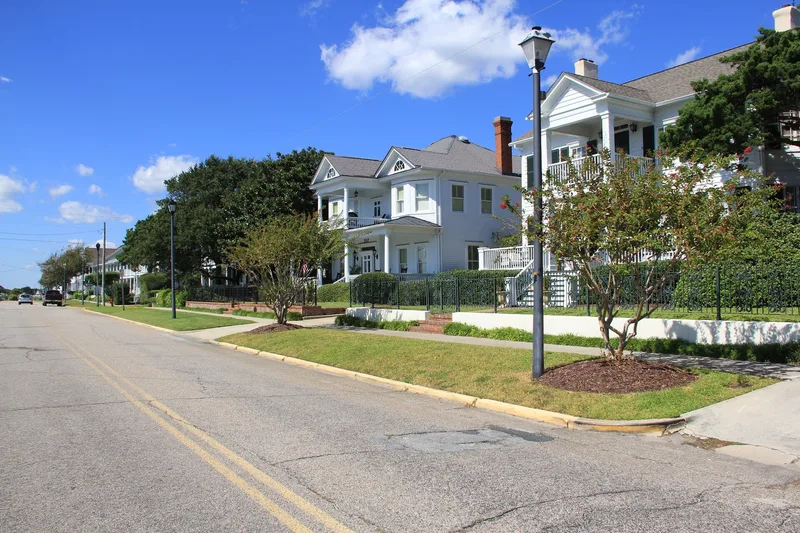
Beaufort is a small coastal town in Carteret County, North Carolina, laid out in a compact grid beside a harbor opposite Beaufort Inlet. Settled in the early eighteenth century and surveyed by Richard Graves, it became a port of entry in 1722 and was incorporated in 1723. Its livelihood has long depended on fishing, shipbuilding, shipping, resort trade and marine research. The district covers about 900 acres of mostly one- and two-story frame houses, many with the steep-then-shallow gable roofs and full-width double porches that give the town its look. Front Street faces the water with a row of white houses, from coastal double-porch dwellings to Queen Anne cottages. Other features include St. Paul's Episcopal Church (1857), the 1907 Carteret County Courthouse, a late nineteenth and early twentieth century commercial row, and the Old Burying Ground dating from about 1724. Few buildings are exceptional on their own, but the consistent scale and form of the whole town is the basis for its listing.
Machine-generated summary. This summary was generated by a language model from the official nomination document and has not been reviewed line by line by an editor. It may contain errors. Check the source document before relying on any detail. Source: nomination document (PDF) · catalog entry. Generated October 2026 (model claude-sonnet-5-5, prompt v1.0-2026-10-29).
| Period of significance | Ca. 1710 to present |
|---|---|
| Styles | Vernacular coastal types with Georgian, Federal, Greek Revival, Gothic Revival, Queen Anne and Shingle influences |
| Areas of significance | Community Planning and Development, Commerce, Military, Transportation, Science, Architecture |
| Acreage | 900 |
| Boundary source | NPS cultural-resource GIS polygon |
| Full listing page | Beaufort Historic District (property record) |
What listing means for this property
This is a historic district. Buildings within its boundary are either contributing (they add to the district's significance) or non-contributing. Owners of contributing income-producing buildings can claim the 20% federal rehabilitation tax credit; homeowners should look at state credits. National Register districts impose no design review by themselves; a local historic district ordinance, if one exists, does (the difference explained).
General information, not legal or tax advice. Rules change; confirm with your State Historic Preservation Office or a qualified adviser.