Windsor Village Historic District

Why it's listed
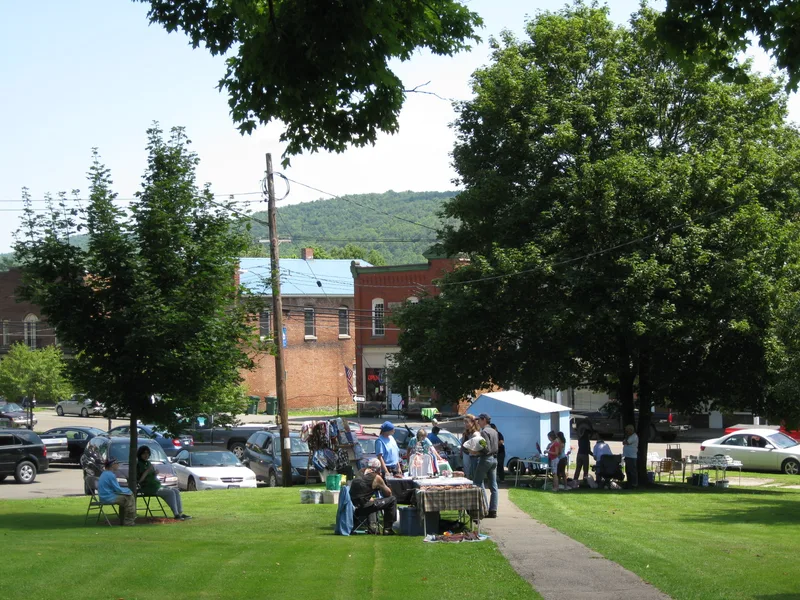
Windsor's historic district occupies a triangular area at the center of the village, on the west bank of the Susquehanna River in Broome County. It includes eighty buildings, the Village Cemetery and the Village Green, and the oldest structure dates from about 1810. Most buildings are modest local adaptations of popular styles, with Greek Revival the most characteristic, especially around the Green and at the northern entrance to the district. The village was laid out on New England models by David Hotchkiss, who set aside the Green as a public square, and Elias Whittemore later drew businesses from the older Oquaga settlement. Whip manufacturing, which became the main industry by the late 1850s, funded many of the more elegant houses and the brick commercial blocks along south Main Street, rebuilt after fires. The Gothic Revival Zion Episcopal Church is attributed to Richard Upjohn. The original street layout and business district location survive, with only eleven intrusions.
Machine-generated summary. This summary was generated by a language model from the official nomination document and has not been reviewed line by line by an editor. It may contain errors. Check the source document before relying on any detail. Source: nomination document (PDF) · catalog entry. Generated October 2026 (model claude-sonnet-5-5, prompt v1.0-2026-10-29).
| Styles | Greek Revival predominant, with Federal, Gothic Revival, Italianate, Second Empire, Queen Anne and other styles |
|---|---|
| Areas of significance | Exploration/Settlement, Architecture |
| Acreage | 55 |
| Boundary source | NPS cultural-resource GIS polygon |
| Full listing page | Windsor Village Historic District (property record) |
What listing means for this property
This is a historic district. Buildings within its boundary are either contributing (they add to the district's significance) or non-contributing. Owners of contributing income-producing buildings can claim the 20% federal rehabilitation tax credit; homeowners should look at state credits. National Register districts impose no design review by themselves; a local historic district ordinance, if one exists, does (the difference explained).
General information, not legal or tax advice. Rules change; confirm with your State Historic Preservation Office or a qualified adviser.