Thirty Mile Point Light

The National Park Service has not published a boundary polygon for this district; the map shows the listed properties inside it and the district's reference point.
Why it's listed
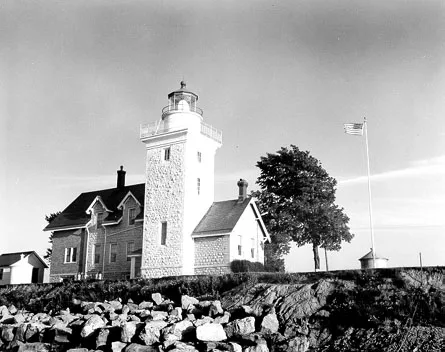
Thirty Mile Point Light is a lake-coast lighthouse on the Lake Ontario shore in Somerset, Niagara County, New York. Congress appropriated $30,000 in 1873 for a light at or near Thirty Mile Point to guide ships bound for the Welland Canal. Ground was broken in April 1875, and the grey limestone tower and attached dwelling were finished in January 1876. A flashing white light of the third order first shone on 27 April 1876. The 61-foot tower rises from the north face of a two-story Stick-Style keepers' dwelling that housed the keeper and an assistant. The dwelling was partly remodeled in 1934, when a new brick wing replaced the kitchen wing. Its interior is largely intact. Outbuildings include two round iron oil houses, a barn, a woodshed, a privy and a yellow brick fog-signal house from about 1935. A steel skeleton tower replaced the light in 1959. The station is valued for its role in Great Lakes shipping and as one of the oldest lighthouses of its type.
Machine-generated summary. This summary was generated by a language model from the official nomination document and has not been reviewed line by line by an editor. It may contain errors. Check the source document before relying on any detail. Source: nomination document (PDF) · catalog entry. Generated October 2026 (model claude-sonnet-5-5, prompt v1.0-2026-10-29).
| Styles | Stick-Style (keepers' dwelling) |
|---|---|
| Areas of significance | Commerce, Engineering, Transportation |
| Acreage | 1.5 |
| Boundary source | not published |
| Full listing page | Thirty Mile Point Light (property record) |
What listing means for this property
This is a historic district. Buildings within its boundary are either contributing (they add to the district's significance) or non-contributing. Owners of contributing income-producing buildings can claim the 20% federal rehabilitation tax credit; homeowners should look at state credits. National Register districts impose no design review by themselves; a local historic district ordinance, if one exists, does (the difference explained).
General information, not legal or tax advice. Rules change; confirm with your State Historic Preservation Office or a qualified adviser.