Third Ward Historic District

Why it's listed
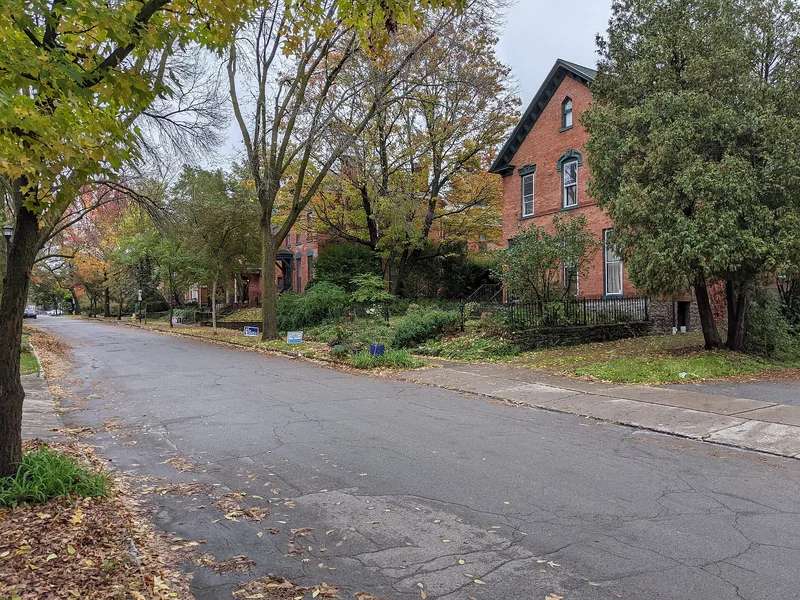
Tucked into the inner southwest corner of Rochester and cut off from downtown by Interstate 490, this seven-block residential neighborhood holds about 126 structures, mostly brick houses. Styles run from heavy Greek Revival temple-fronted homes to Italianate villas with cupolas, Gothic houses with towers and cresting, and early twentieth century apartment buildings. Between about 1830 and 1880 it was the city's choicest residential district, set apart from the business area by the Erie Canal. Its residents included millers Hervey Ely and Benjamin Campbell, lumber merchants Amon Bronson and Emmet Hollister, mayor Charles J. Hayden, and for a time the young Leonard Jerome, grandfather of Winston Churchill. Local architect Isaac Loomis built a Carpenter Gothic cottage for himself at 42 Atkinson Street. After decay in the early twentieth century, urban renewal and demonstration rehabilitation by the Genesee Landmarks Foundation revived the area, and about two-thirds of its buildings have since been rehabilitated.
Machine-generated summary. This summary was generated by a language model from the official nomination document and has not been reviewed line by line by an editor. It may contain errors. Check the source document before relying on any detail. Source: nomination document (PDF) · catalog entry. Generated October 2026 (model claude-sonnet-5-5, prompt v1.0-2026-10-29).
| Styles | Greek Revival, Italianate villas, Gothic and Carpenter Gothic, late Victorian, with early twentieth century apartment buildings |
|---|---|
| Areas of significance | Architecture, Community Planning and Development, Ethnic Heritage-Black |
| Acreage | 35 |
| Boundary source | NPS cultural-resource GIS polygon |
| Full listing page | Third Ward Historic District (property record) |
What listing means for this property
This is a historic district. Buildings within its boundary are either contributing (they add to the district's significance) or non-contributing. Owners of contributing income-producing buildings can claim the 20% federal rehabilitation tax credit; homeowners should look at state credits. National Register districts impose no design review by themselves; a local historic district ordinance, if one exists, does (the difference explained).
General information, not legal or tax advice. Rules change; confirm with your State Historic Preservation Office or a qualified adviser.