Stuyvesant Heights Historic District (Boundary Increase)

Why it's listed
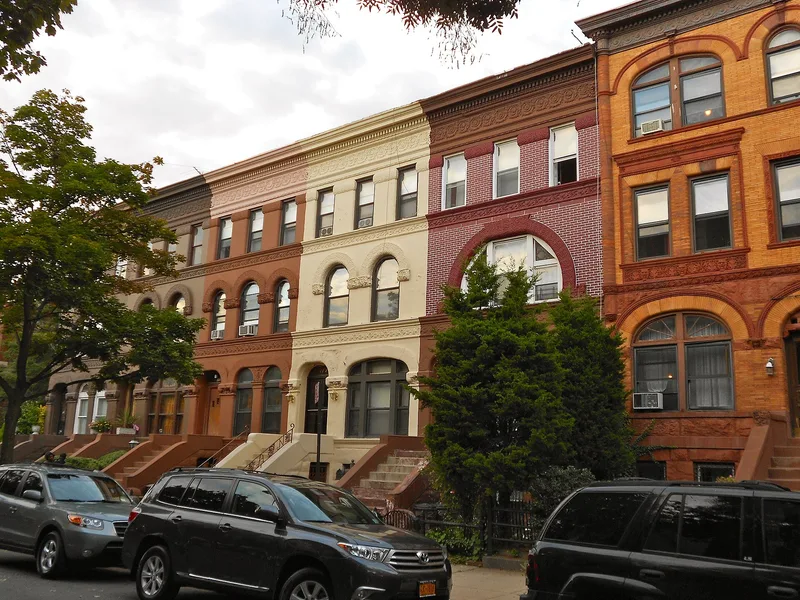
This addition to the Stuyvesant Heights Historic District in central Brooklyn takes in parts of seven blocks along Decatur Street and neighboring streets, directly south of the district listed in 1975. It holds 151 contributing buildings, three noncontributing buildings and one vacant lot. Most are two- and three-story rowhouses with raised basements and high stoops, built mainly between 1884 and the early 1890s. Neo-Grec brownstone and brick fronts predominate, alongside Queen Anne, Romanesque Revival and Neo-Renaissance designs. Seventeen modest multiple dwellings and one church also appear. Several rows have unusually wide cornices incorporating attic windows, a feature found in significant numbers only in central Brooklyn. The earliest buildings date to 1882 and the latest is a 1926 apartment house. The form argues that the area shares architects, developers, styles and residents with the original district, and that its buildings record the shift from farmland to a built-up neighborhood of the city of Brooklyn. The expansion was recognized for architecture and for community planning and development.
Machine-generated summary. This summary was generated by a language model from the official nomination document and has not been reviewed line by line by an editor. It may contain errors. Check the source document before relying on any detail. Source: nomination document (PDF) · catalog entry. Generated October 2026 (model claude-sonnet-5-5, prompt v1.0-2026-10-29).
| Period of significance | c. 1882-1926 |
|---|---|
| Styles | Late Victorian: Italianate, Second Empire, Neo-Grec, Queen Anne, Romanesque Revival, Renaissance |
| Areas of significance | Architecture, Community Planning and Development |
| Acreage | 10 |
| Boundary source | NPS cultural-resource GIS polygon |
| Full listing page | Stuyvesant Heights Historic District (Boundary Increase) (property record) |
What listing means for this property
This is a historic district. Buildings within its boundary are either contributing (they add to the district's significance) or non-contributing. Owners of contributing income-producing buildings can claim the 20% federal rehabilitation tax credit; homeowners should look at state credits. National Register districts impose no design review by themselves; a local historic district ordinance, if one exists, does (the difference explained).
General information, not legal or tax advice. Rules change; confirm with your State Historic Preservation Office or a qualified adviser.