Prospect Park

Why it's listed
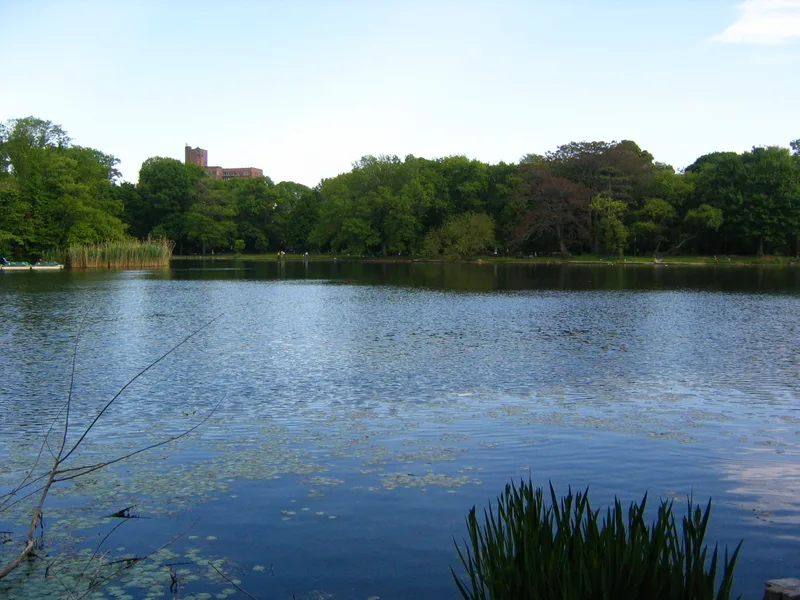
Prospect Park is a 526-acre public park in Brooklyn, designed by Frederick Law Olmsted and Calvert Vaux, who were appointed in 1866 after their Central Park work. Construction began that July and the park was largely complete by 1873. The designers turned hills, gullies, and swampy hollows into three distinct districts: the open Long Meadow, wooded hills, and a fifty-seven acre lake fed by a man-made stream system. Carriage drives, bridle paths, and walks were kept separate, with arches carrying drives over pedestrian routes. Later work added a second layer of design. Around 1895 to 1905, McKim, Mead & White gave several entrances a classical character, and Grand Army Plaza is dominated by the Soldiers' and Sailors' Memorial Arch of 1889-92. Other features include the Boathouse, the Grecian Shelter, the Lefferts Homestead, and the Camperdown Elm. The park remains Brooklyn's principal green space and recreational site.
Machine-generated summary. This summary was generated by a language model from the official nomination document and has not been reviewed line by line by an editor. It may contain errors. Check the source document before relying on any detail. Source: nomination document (PDF) · catalog entry. Generated October 2026 (model claude-sonnet-5-5, prompt v1.0-2026-10-29).
| Areas of significance | Landscape Architecture, Art, Architecture |
|---|---|
| Acreage | 526 |
| Boundary source | NPS cultural-resource GIS polygon |
| Full listing page | Prospect Park (property record) |
What listing means for this property
This is a historic district. Buildings within its boundary are either contributing (they add to the district's significance) or non-contributing. Owners of contributing income-producing buildings can claim the 20% federal rehabilitation tax credit; homeowners should look at state credits. National Register districts impose no design review by themselves; a local historic district ordinance, if one exists, does (the difference explained).
General information, not legal or tax advice. Rules change; confirm with your State Historic Preservation Office or a qualified adviser.