Jumel Terrace Historic District

Why it's listed
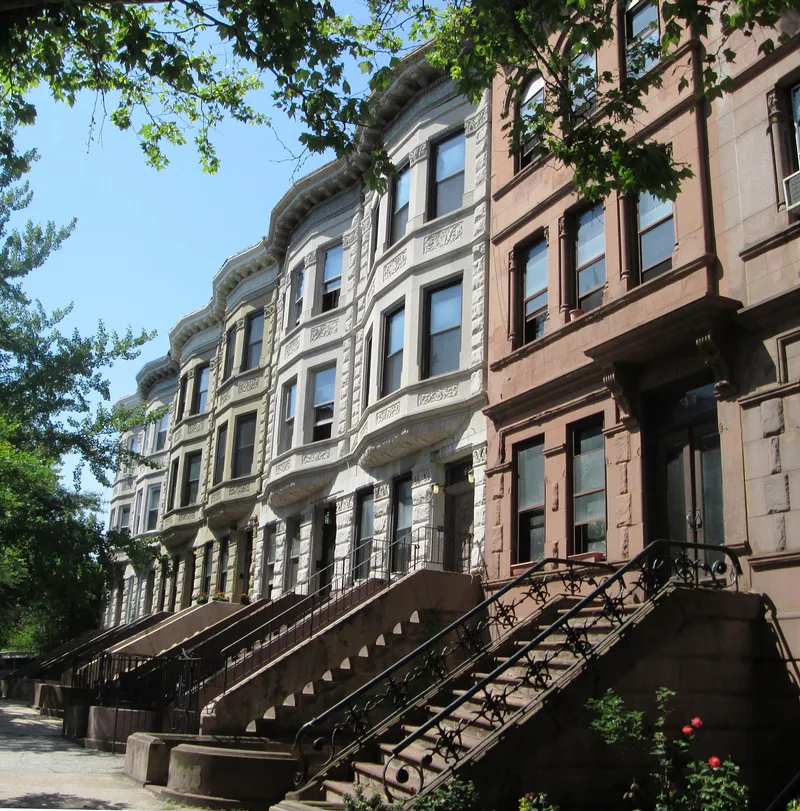
Surrounding the Morris-Jumel Mansion and Roger Morris Park in Manhattan, this district holds almost fifty row houses and one apartment house along West 160th and 162nd Streets, Jumel Terrace and Sylvan Terrace. The area was farmland until 1882, when two rows of wooden houses were built facing each other on Sylvan Terrace, a former private carriage lane. Brick houses showing Queen Anne influence followed on West 160th Street in 1890-91, Romanesque Revival stone houses on Jumel Terrace and West 162nd Street in 1895-96, Classical Revival houses in 1902, and a brick and limestone apartment house in 1909. Architect Walter H.C. Hornum designed the stone houses on the north side of West 162nd Street. The district matters because nearly every building is the original and only construction on its site, and because it provides a consistent setting for the mansion, which served as George Washington's headquarters in 1776. Its whole development took place within thirty years.
Machine-generated summary. This summary was generated by a language model from the official nomination document and has not been reviewed line by line by an editor. It may contain errors. Check the source document before relying on any detail. Source: nomination document (PDF) · catalog entry. Generated October 2026 (model claude-sonnet-5-5, prompt v1.0-2026-10-29).
| Period of significance | c. 1765, 1882-1909 |
|---|---|
| Styles | Romanesque Revival, Queen Anne, neo-Renaissance/Classical Revival |
| Areas of significance | Architecture |
| Acreage | 4 |
| Boundary source | NPS cultural-resource GIS polygon |
| Full listing page | Jumel Terrace Historic District (property record) |
What listing means for this property
This is a historic district. Buildings within its boundary are either contributing (they add to the district's significance) or non-contributing. Owners of contributing income-producing buildings can claim the 20% federal rehabilitation tax credit; homeowners should look at state credits. National Register districts impose no design review by themselves; a local historic district ordinance, if one exists, does (the difference explained).
General information, not legal or tax advice. Rules change; confirm with your State Historic Preservation Office or a qualified adviser.