Fredella Avenue Historic District

The National Park Service has not published a boundary polygon for this district; the map shows the listed properties inside it and the district's reference point.
Why it's listed
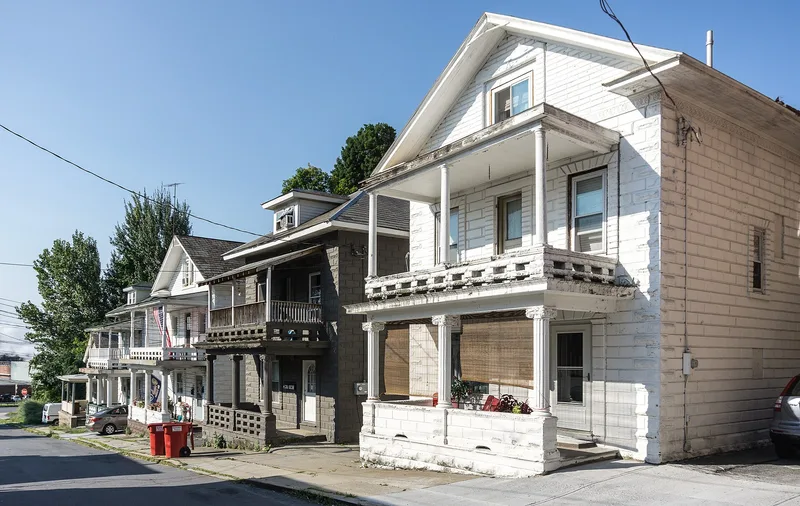
Fredella Avenue in Glens Falls is a short, steeply inclined street lined with eight closely spaced concrete houses, set in an area surrounded by heavy industry. Local builder Joseph J. Fredella, an Italian mason who immigrated in 1901, built them between 1914 and 1918 as speculative housing for Italian immigrant families working in nearby stone quarries. The street was then called Lime Street. Walls of molded concrete block imitate ashlar stone, and cast concrete trim includes quoins, friezes, modillions and fluted porch columns with classical capitals. Most houses have two-story porches; one house has three stories, and one has been covered with aluminum siding over its concrete walls. The district is significant because it shows how an inexpensive, novel material could produce stylish Neoclassical detail. Fredella's technique never gained wide popularity after his death in 1930, which makes these houses a rare and notable group of working-class early twentieth-century housing in the city.
Machine-generated summary. This summary was generated by a language model from the official nomination document and has not been reviewed line by line by an editor. It may contain errors. Check the source document before relying on any detail. Source: nomination document (PDF) · catalog entry. Generated October 2026 (model claude-sonnet-5-5, prompt v1.0-2026-10-29).
| Period of significance | 1914-1918 |
|---|---|
| Styles | Neoclassical decorative elements in molded concrete block construction |
| Areas of significance | Architecture |
| Acreage | 0.9 |
| Boundary source | not published |
| Full listing page | Fredella Avenue Historic District (property record) |
What listing means for this property
This is a historic district. Buildings within its boundary are either contributing (they add to the district's significance) or non-contributing. Owners of contributing income-producing buildings can claim the 20% federal rehabilitation tax credit; homeowners should look at state credits. National Register districts impose no design review by themselves; a local historic district ordinance, if one exists, does (the difference explained).
General information, not legal or tax advice. Rules change; confirm with your State Historic Preservation Office or a qualified adviser.