Coleman Station Historic District

Why it's listed
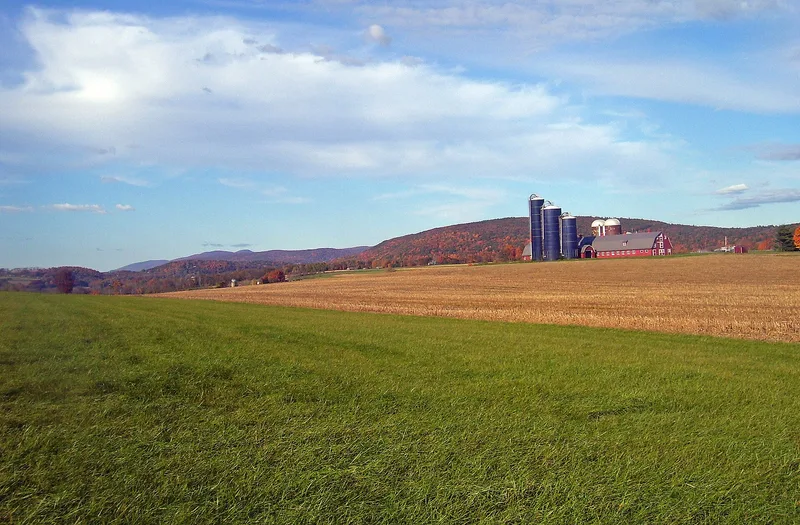
Coleman Station is a small farming hamlet in a hollow where the Webatuck Creek and its tributaries meet, near the New York-Connecticut line south of Millerton. Settlers from Connecticut and Massachusetts began buying land in the 1750s and 1760s, and families such as the Wheelers, Collins and Dakins established farms on the hillsides facing the valley. A farmhouse on Coleman Station Road carries a date stone reading 1771. The Harlem Valley Railroad arrived in 1851, giving the place its name from landowner Amasa Coleman and adding grist and plaster mills, mining of peat, slate and iron, and later a milk plant and ice pond. In the early 1900s businessman Thomas Hidden built the Hiddenhurst country estate, later replaced in part by a large dairy farm. The district includes 60 contributing buildings, a cemetery and preserved farm landscapes, and it is regarded as representative of the wider Oblong region.
Machine-generated summary. This summary was generated by a language model from the official nomination document and has not been reviewed line by line by an editor. It may contain errors. Check the source document before relying on any detail. Source: nomination document (PDF) · catalog entry. Generated October 2026 (model claude-sonnet-5-5, prompt v1.0-2026-10-29).
| Styles | Colonial; Early Republic; Late 19th & Early 20th Century Revivals |
|---|---|
| Areas of significance | Industry, Agriculture, Exploration/Settlement, Architecture |
| Acreage | 1812 |
| Boundary source | NPS cultural-resource GIS polygon |
| Full listing page | Coleman Station Historic District (property record) |
What listing means for this property
This is a historic district. Buildings within its boundary are either contributing (they add to the district's significance) or non-contributing. Owners of contributing income-producing buildings can claim the 20% federal rehabilitation tax credit; homeowners should look at state credits. National Register districts impose no design review by themselves; a local historic district ordinance, if one exists, does (the difference explained).
General information, not legal or tax advice. Rules change; confirm with your State Historic Preservation Office or a qualified adviser.