West Gardner Square Historic District

Why it's listed
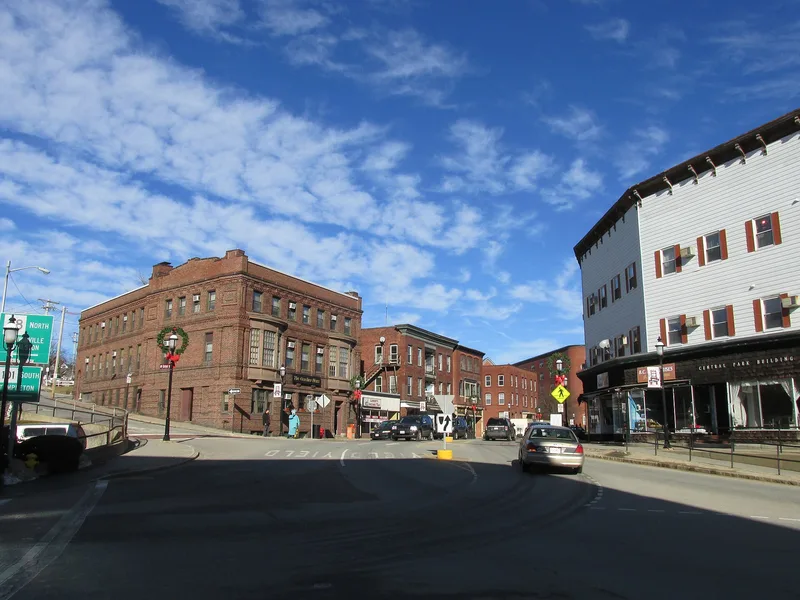
West Gardner Square Historic District is a 34-acre area in north-central Gardner, Massachusetts, a city long known for furniture manufacturing. It centers on a star-shaped intersection where Central, West Lynde, Parker, Vernon and Main Streets meet. The district combines a commercial core of one- to five-story brick blocks, an industrial section with three factory complexes, a landscaped civic area along Pleasant Street, and a few early houses on Pine Street. About forty-eight buildings and the three factory complexes are counted, mostly from the early 20th century and largely Classical or Colonial Revival in inspiration. Its importance comes from how fully it records Gardner's commercial, civic and industrial growth, especially the prosperity of the 1920s when furniture makers such as Heywood-Wakefield employed thousands. Unlike surrounding neighborhoods that lost buildings to alteration and demolition, the district kept its architectural integrity. Four properties within it were already individually listed before the district was recognized.
Machine-generated summary. This summary was generated by a language model from the official nomination document and has not been reviewed line by line by an editor. It may contain errors. Check the source document before relying on any detail. Source: nomination document (PDF) · catalog entry. Generated October 2026 (model claude-sonnet-5-5, prompt v1.0-2026-10-29).
| Styles | Mainly Classical Revival and Colonial Revival, with Victorian vernacular, Italianate, Romanesque Revival, Art Deco and industrial vernacular buildings |
|---|---|
| Areas of significance | Industry, Community Planning and Development, Commerce, Politics/Government, Architecture |
| Acreage | 340 |
| Boundary source | NPS cultural-resource GIS polygon |
| Full listing page | West Gardner Square Historic District (property record) |
What listing means for this property
This is a historic district. Buildings within its boundary are either contributing (they add to the district's significance) or non-contributing. Owners of contributing income-producing buildings can claim the 20% federal rehabilitation tax credit; homeowners should look at state credits. National Register districts impose no design review by themselves; a local historic district ordinance, if one exists, does (the difference explained).
General information, not legal or tax advice. Rules change; confirm with your State Historic Preservation Office or a qualified adviser.