West Barnstable Village-Meetinghouse Way Historic District

Why it's listed
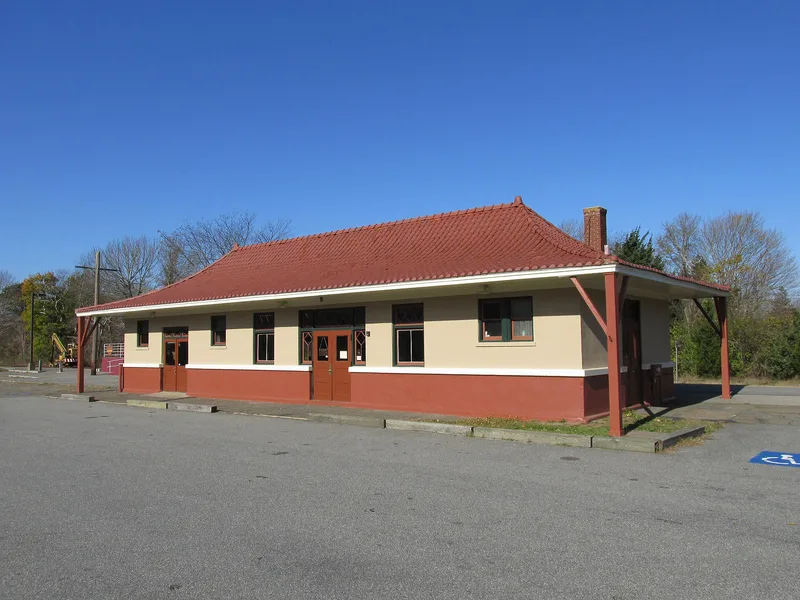
Meetinghouse Way in West Barnstable forms a dispersed linear village of old homesteads mixed with later civic and commercial buildings. The district covers about 175 acres and includes 26 main buildings, outbuildings and several sites dated between 1717 and about 1920. Its anchor is the West Parish Meetinghouse, built in 1717-1719 when residents separated from the original parish at Lothrop's Hill; it was remodelled in the 1850s and restored between 1953 and 1956. Most houses are Federal-era farmhouses built by families such as the Crockers, Parkers and Bodfishes. The Cape Cod Branch Railroad arrived in 1854 and brought a station, school, post office, stores and workshops. Later brick, chair, hat, leather and pottery making, and cranberry cultivation, drew Finnish and Portuguese immigrants. Buildings such as the 1905-1907 Makepeace office and the 1910 concrete railroad depot show this commercial growth. Together they give a continuous picture of village life over several centuries.
Machine-generated summary. This summary was generated by a language model from the official nomination document and has not been reviewed line by line by an editor. It may contain errors. Check the source document before relying on any detail. Source: nomination document (PDF) · catalog entry. Generated October 2026 (model claude-sonnet-5-5, prompt v1.0-2026-10-29).
| Period of significance | 1717-1920 |
|---|---|
| Styles | Georgian, Federal, Greek Revival/Italianate, Queen Anne, Colonial Revival and Arts & Crafts/Mission |
| Areas of significance | Industry, Commerce, Architecture, Religion |
| Acreage | 175 |
| Boundary source | NPS cultural-resource GIS polygon |
| Full listing page | West Barnstable Village-Meetinghouse Way Historic District (property record) |
What listing means for this property
This is a historic district. Buildings within its boundary are either contributing (they add to the district's significance) or non-contributing. Owners of contributing income-producing buildings can claim the 20% federal rehabilitation tax credit; homeowners should look at state credits. National Register districts impose no design review by themselves; a local historic district ordinance, if one exists, does (the difference explained).
General information, not legal or tax advice. Rules change; confirm with your State Historic Preservation Office or a qualified adviser.