Town Hall Square Historic District Boundary Increase

Why it's listed
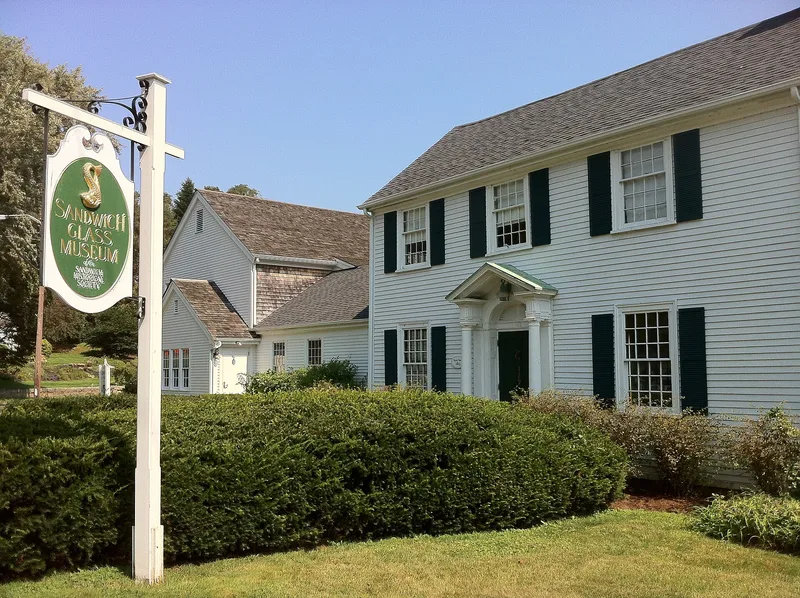
Centered on Sandwich's village core, this historic district surrounds Town Hall Square, where the 1834 Town Hall and the Dexter Grist Mill overlook Lower Shawme Lake. The 2010 amendment enlarges a district first listed in 1975 from about 50 acres by roughly 170 acres, bringing the total to 198 resources. Dwellings dominate, running from the late 17th century Hoxie House to early 20th century homes, with side-gabled Cape forms common. Greek Revival, Victorian and Colonial Revival styles also appear. Civic and religious buildings, commercial blocks along Main Street, monuments and three cemeteries add variety. The 25-acre mill lake, created by early settlers, drew early settlement and industry. In the 19th century the Boston & Sandwich Glass Company, founded in 1825, fueled growth. Managers and workers built houses in the area, while the nearby village of Jarvesville housed many factory families. Mature trees, lawns and consistent building placement give the district a cohesive character.
Machine-generated summary. This summary was generated by a language model from the official nomination document and has not been reviewed line by line by an editor. It may contain errors. Check the source document before relying on any detail. Source: nomination document (PDF) · catalog entry. Generated October 2026 (model claude-sonnet-5-5, prompt v1.0-2026-10-29).
| Styles | Federal, Greek Revival, Italianate, Queen Anne, Second Empire, Shingle Style, Colonial Revival, Bungalow |
|---|---|
| Areas of significance | Architecture, Community Planning and Development, Industry, Historic - Non-Aboriginal |
| Acreage | 220 |
| Boundary source | NPS cultural-resource GIS polygon |
| Full listing page | Town Hall Square Historic District Boundary Increase (property record) |
What listing means for this property
This is a historic district. Buildings within its boundary are either contributing (they add to the district's significance) or non-contributing. Owners of contributing income-producing buildings can claim the 20% federal rehabilitation tax credit; homeowners should look at state credits. National Register districts impose no design review by themselves; a local historic district ordinance, if one exists, does (the difference explained).
General information, not legal or tax advice. Rules change; confirm with your State Historic Preservation Office or a qualified adviser.