Newton Upper Falls Historic District

Why it's listed
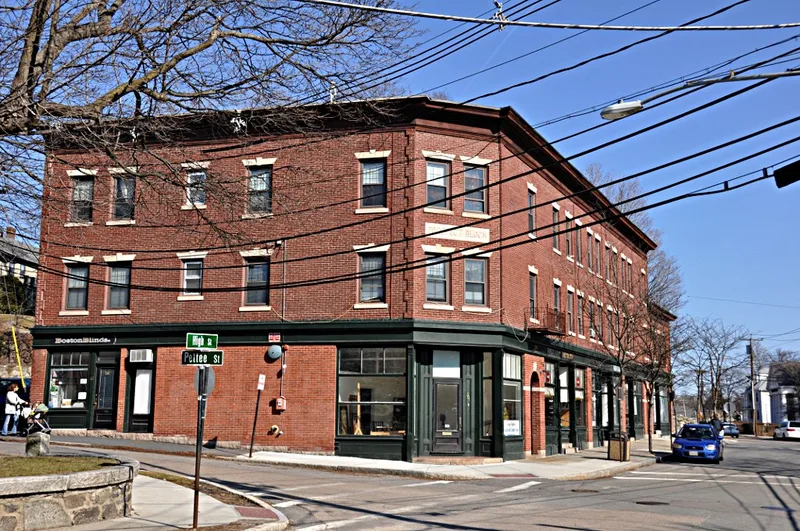
Upper Falls is a former mill village in Newton, Massachusetts, where the Charles River drops 26 feet through a narrow gorge. Water power, used from 1688, determined where the mills, streets and houses were placed. The district covers roughly 69 acres and includes about 182 buildings, among them the brick Elliot Manufacturing Company cotton mills begun in 1821, workers' cottages, churches, schools, shops, and the Gamewell fire alarm factory. Greek Revival is the most common style, with later Italianate, Stick Style and Queen Anne examples. The oldest building is the Bixby House, dating from about 1750. Echo Bridge, a seven-arch granite aqueduct bridge of 1876-77, and the stone Cook's Bridge cross the river into Needham. Otis Pettee's machine shops and the arrival of the railroad drew the village center away from the falls. Few metropolitan communities retain so intact a collection of early structures, which is why the area was listed.
Machine-generated summary. This summary was generated by a language model from the official nomination document and has not been reviewed line by line by an editor. It may contain errors. Check the source document before relying on any detail. Source: nomination document (PDF) · catalog entry. Generated October 2026 (model claude-sonnet-5-5, prompt v1.0-2026-10-29).
| Period of significance | 1790-1910 |
|---|---|
| Styles | Mixed styles: Georgian, Federal, Greek Revival, Gothic Revival, Italianate, Mansard, Stick Style, Queen Anne, Colonial Revival |
| Areas of significance | Industry, Commerce, Transportation, Architecture |
| Acreage | 69.6 |
| Boundary source | NPS cultural-resource GIS polygon |
| Full listing page | Newton Upper Falls Historic District (property record) |
What listing means for this property
This is a historic district. Buildings within its boundary are either contributing (they add to the district's significance) or non-contributing. Owners of contributing income-producing buildings can claim the 20% federal rehabilitation tax credit; homeowners should look at state credits. National Register districts impose no design review by themselves; a local historic district ordinance, if one exists, does (the difference explained).
General information, not legal or tax advice. Rules change; confirm with your State Historic Preservation Office or a qualified adviser.