Moreland Street Historic District

Why it's listed
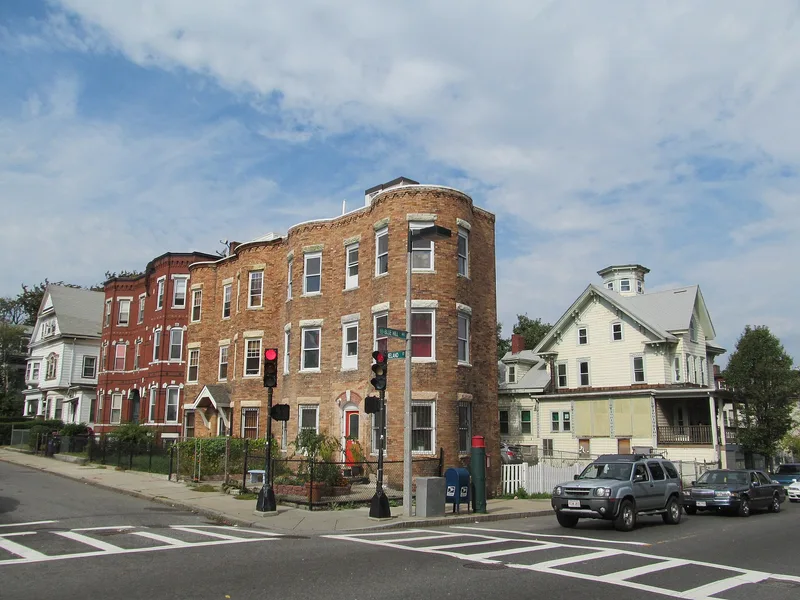
Moreland Street Historic District, also known as Mount Pleasant, is a 63-acre residential neighborhood in Roxbury, Boston, set between Warren Street and Blue Hill Avenue. Its gently curving streets, finished around 1890, are lined with 280 primary buildings built between 1840 and 1930, of which 270 contribute to the district's character. Wood-frame houses make up about 80 percent of the total. The area displays a broad range of styles: Gothic Revival cottages from the 1840s on Montrose Street, Italianate mansions on Moreland, Perrin and Winthrop Streets, Second Empire houses with slate mansard roofs, and Queen Anne and Colonial Revival houses, row blocks and three-deckers. Architects included Nathaniel J. Bradlee and J.H. Besarick. Consistent building heights, deed-restricted setbacks and mature trees keep the streetscapes coherent. Compared with other parts of Roxbury, the neighborhood lost relatively few buildings to neglect, fire and urban renewal, which is central to why it was listed.
Machine-generated summary. This summary was generated by a language model from the official nomination document and has not been reviewed line by line by an editor. It may contain errors. Check the source document before relying on any detail. Source: nomination document (PDF) · catalog entry. Generated October 2026 (model claude-sonnet-5-5, prompt v1.0-2026-10-29).
| Styles | Wide range of 19th and early 20th century residential styles, including Greek Revival, Gothic Revival, Italianate, Second Empire, Queen Anne and Colonial Revival |
|---|---|
| Areas of significance | Community Planning and Development, Politics/Government, Architecture, Social History |
| Acreage | 63.1 |
| Boundary source | NPS cultural-resource GIS polygon |
| Full listing page | Moreland Street Historic District (property record) |
What listing means for this property
This is a historic district. Buildings within its boundary are either contributing (they add to the district's significance) or non-contributing. Owners of contributing income-producing buildings can claim the 20% federal rehabilitation tax credit; homeowners should look at state credits. National Register districts impose no design review by themselves; a local historic district ordinance, if one exists, does (the difference explained).
General information, not legal or tax advice. Rules change; confirm with your State Historic Preservation Office or a qualified adviser.