Fort Taber District

Why it's listed
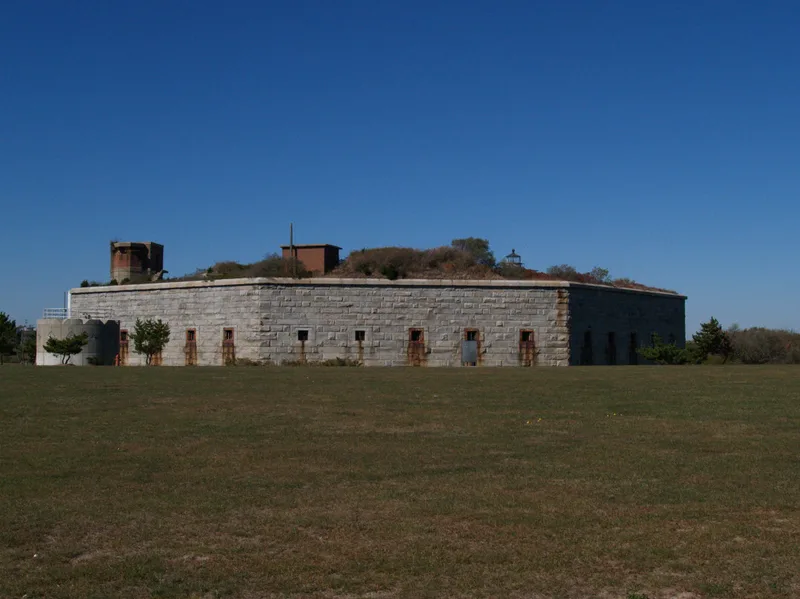
Clark's Point in New Bedford holds a coastal defense district made up of Fort Taber and five gun batteries. The fort is a seven-sided, three-story structure of hand-cut granite with a five-sided interior court, seaward gun embrasures of the Totten class, and a single landward sally-port entrance. Construction began in May 1861 after the federal government bought the land in 1858. Major Richard Delafield drew the initial designs, assisted by Captain Robert E. Lee, and Colonel Henry Martyn Roberts supervised the work. The Great Stone Fleet assembled under its guns in 1861. After years of vacancy the fort served as Marine Park from 1892, then was regarrisoned in 1898, when five reinforced-concrete batteries were added through 1901. It was declared obsolete in 1947 and later served as a training center and Job Corps site. At the time of listing, New Bedford was acquiring the property for a military museum and park.
Machine-generated summary. This summary was generated by a language model from the official nomination document and has not been reviewed line by line by an editor. It may contain errors. Check the source document before relying on any detail. Source: nomination document (PDF) · catalog entry. Generated October 2026 (model claude-sonnet-5-5, prompt v1.0-2026-10-29).
| Areas of significance | Industry, Commerce |
|---|---|
| Acreage | 10.9 |
| Boundary source | NPS cultural-resource GIS polygon |
| Full listing page | Fort Taber District (property record) |
What listing means for this property
This is a historic district. Buildings within its boundary are either contributing (they add to the district's significance) or non-contributing. Owners of contributing income-producing buildings can claim the 20% federal rehabilitation tax credit; homeowners should look at state credits. National Register districts impose no design review by themselves; a local historic district ordinance, if one exists, does (the difference explained).
General information, not legal or tax advice. Rules change; confirm with your State Historic Preservation Office or a qualified adviser.