Fisher Hill Historic District

Why it's listed
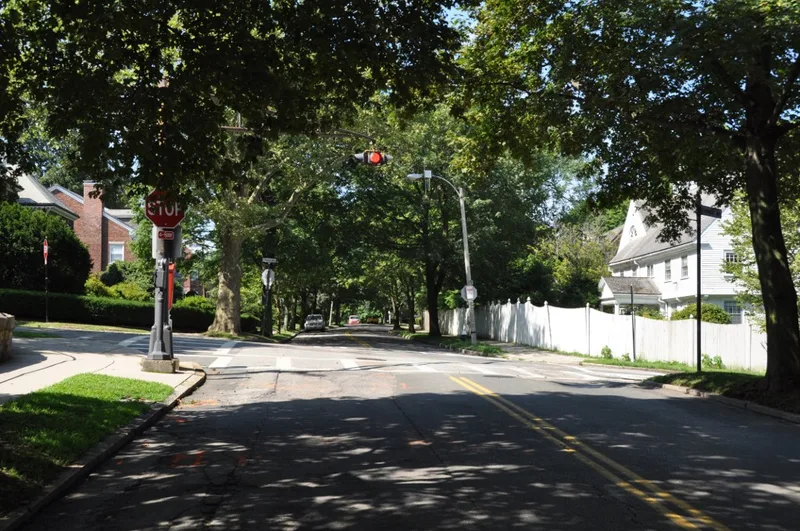
Fisher Hill is a hilltop residential district in Brookline, Massachusetts, covering about 150 acres between Boylston Street, Chestnut Hill Avenue, Clinton Road and Sumner Road. Until the 1880s it held large estates. In 1884 landowners asked Frederick Law Olmsted to plan a subdivision, and he and John Charles Olmsted used curving streets to suit the uneven terrain. Developer Jacob Pierce laid out several roads and built houses on speculation, aiming to keep the area high-class. In 1914 165 property owners signed a covenant barring apartment houses, two-family houses, garages, stores and hospitals. The result is a collection of single-family houses in Queen Anne, Shingle, Colonial, Medieval Revival and Craftsman styles, designed by well-known Boston architects. Residents included Galen Stone, John Longyear, Arthur Rotch and several noted musicians. A 1981 condominium development on the former White/Galen Stone estate, a college campus and some modern houses are considered non-contributing.
Machine-generated summary. This summary was generated by a language model from the official nomination document and has not been reviewed line by line by an editor. It may contain errors. Check the source document before relying on any detail. Source: nomination document (PDF) · catalog entry. Generated October 2026 (model claude-sonnet-5-5, prompt v1.0-2026-10-29).
| Period of significance | 1890-1920 |
|---|---|
| Styles | Queen Anne, Shingle, Jacobethan, Colonial, Georgian, Medieval Revival, Craftsman; a Federal style house also noted |
| Areas of significance | Community Planning and Development, Landscape Architecture, Architecture |
| Acreage | 150 |
| Boundary source | NPS cultural-resource GIS polygon |
| Full listing page | Fisher Hill Historic District (property record) |
What listing means for this property
This is a historic district. Buildings within its boundary are either contributing (they add to the district's significance) or non-contributing. Owners of contributing income-producing buildings can claim the 20% federal rehabilitation tax credit; homeowners should look at state credits. National Register districts impose no design review by themselves; a local historic district ordinance, if one exists, does (the difference explained).
General information, not legal or tax advice. Rules change; confirm with your State Historic Preservation Office or a qualified adviser.