Downtown Fall River Historic District

Why it's listed
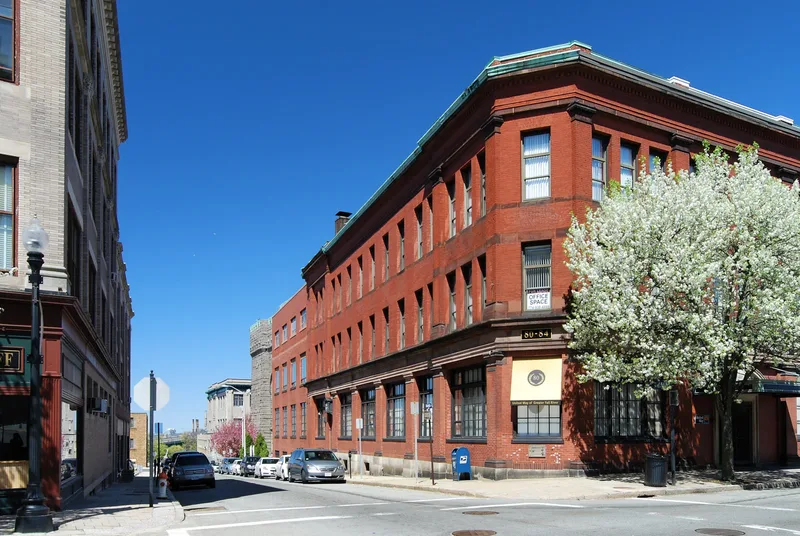
Downtown Fall River's historic district is a five-block commercial strip along Main Street north of City Hall, holding 28 low-rise masonry buildings from one to five stories. Its oldest building is the Mt. Hope Block of 1845, a Greek Revival hotel built after the 1843 fire that burned about 20 acres of the mill town. Later landmarks include the Italianate Old Red Bank of 1869, the Fall River National Bank of 1890, the granite Bank Street Armory of 1895-97 and the Public Library of 1896-98. A second fire in 1928 destroyed much of the Victorian downtown, and rebuilding was modest because the textile industry was collapsing. Art Deco buildings such as First Federal, the Burke Building and the Cooperative Bank date from that period, and the 1931 Customs House and Post Office was the last major addition. The district matters because the banks here financed the textile mills, and the monumental buildings reflect the city's years as a leading cotton-producing center.
Machine-generated summary. This summary was generated by a language model from the official nomination document and has not been reviewed line by line by an editor. It may contain errors. Check the source document before relying on any detail. Source: nomination document (PDF) · catalog entry. Generated October 2026 (model claude-sonnet-5-5, prompt v1.0-2026-10-29).
| Period of significance | 1845-1931 |
|---|---|
| Styles | Range of masonry commercial styles: Greek Revival, Italianate, Victorian Commercial, Romanesque Revival, Renaissance Revival, Classical Revival and Art Deco |
| Areas of significance | Commerce, Architecture |
| Acreage | 7.8 |
| Boundary source | NPS cultural-resource GIS polygon |
| Full listing page | Downtown Fall River Historic District (property record) |
What listing means for this property
This is a historic district. Buildings within its boundary are either contributing (they add to the district's significance) or non-contributing. Owners of contributing income-producing buildings can claim the 20% federal rehabilitation tax credit; homeowners should look at state credits. National Register districts impose no design review by themselves; a local historic district ordinance, if one exists, does (the difference explained).
General information, not legal or tax advice. Rules change; confirm with your State Historic Preservation Office or a qualified adviser.