Diamond Historic District

Why it's listed
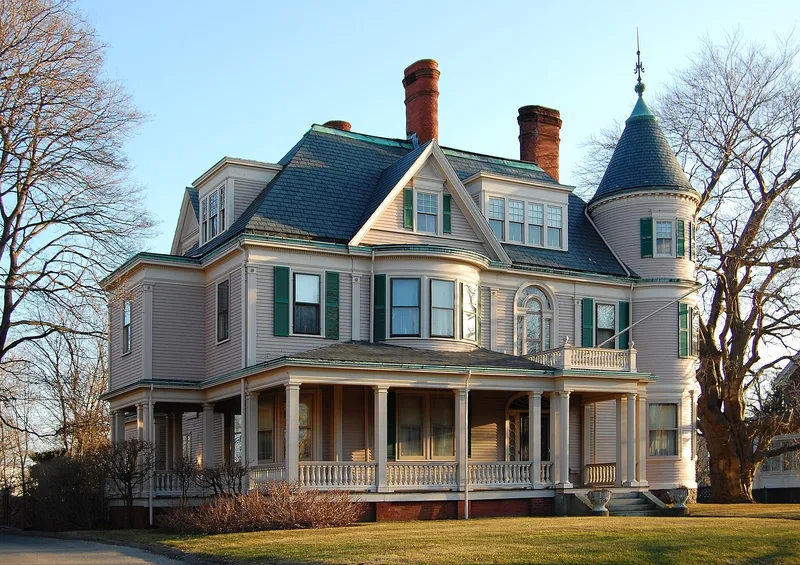
Diamond Historic District is a 69.5-acre residential neighborhood in Lynn, Massachusetts, stretching roughly a mile east from Washington Square along Ocean Street toward Swampscott and including the seawall on Nahant Bay. It contains 590 contributing resources, among them hundreds of houses, 165 carriage houses and garages, churches and synagogues, commercial blocks, a Quaker burying ground and a long concrete seawall. The neighborhood grew from early 19th-century settlement around Washington Square and a fishing village at Kings Beach into seashore estates, which were later subdivided into suburban lots. The result is a wide run of styles, from Federal and Greek Revival through Italianate, Second Empire, Queen Anne, Shingle and Colonial Revival, many with original details intact. Two houses, the Charles Lovejoy House and the Lucien Newhall House, were already individually listed. The district also has archaeological potential, including for shoe manufacturing, Quaker community life and summer estate history.
Machine-generated summary. This summary was generated by a language model from the official nomination document and has not been reviewed line by line by an editor. It may contain errors. Check the source document before relying on any detail. Source: nomination document (PDF) · catalog entry. Generated October 2026 (model claude-sonnet-5-5, prompt v1.0-2026-10-29).
| Styles | Federal, Greek Revival, Gothic Revival, Italianate, Second Empire, Queen Anne, Stick, Shingle, Colonial Revival, Classical Revival, Tudor Revival, Bungalow, Prairie School, International Style, Art Deco and other styles |
|---|---|
| Areas of significance | Architecture, Commerce, Community Planning and Development, Engineering, European, Industry, Religion, Social History |
| Acreage | 69.5 |
| Boundary source | NPS cultural-resource GIS polygon |
| Full listing page | Diamond Historic District (property record) |
What listing means for this property
This is a historic district. Buildings within its boundary are either contributing (they add to the district's significance) or non-contributing. Owners of contributing income-producing buildings can claim the 20% federal rehabilitation tax credit; homeowners should look at state credits. National Register districts impose no design review by themselves; a local historic district ordinance, if one exists, does (the difference explained).
General information, not legal or tax advice. Rules change; confirm with your State Historic Preservation Office or a qualified adviser.