Acushnet Heights Historic District

Why it's listed
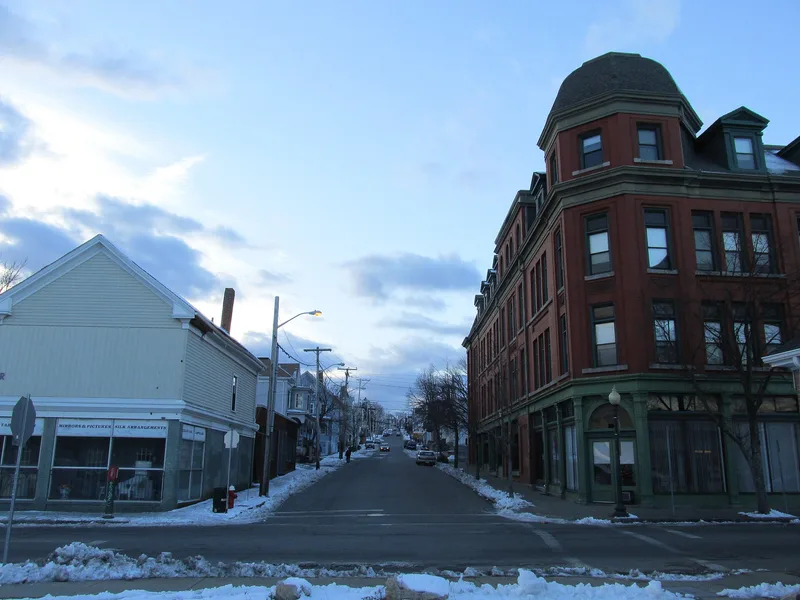
Acushnet Heights is a compact, densely built neighborhood of about 20 acres in the North End of New Bedford, Massachusetts. It sits on a ridge above the Acushnet River and is anchored by Clasky Common Park, the city's original common, laid out in 1822. The district holds 566 buildings, of which 432 contribute to its character. Large estate houses and modest cottages appeared in the 1840s, but the area changed after the 1860s as immigrant mill workers, mainly French Canadian, English and Irish, settled here. At its center are the duplexes and six-family tenements the Wamsutta Mills Corporation built in 1868 for its employees. Triple deckers, two- and three-story wood-frame houses, five churches, three former schools, a fire station and brick commercial blocks on Purchase Street complete the neighborhood. Styles run from Greek Revival and Italianate to Queen Anne and Colonial Revival, mostly in vernacular form. The district records how a textile economy shaped an ethnically mixed working-class community.
Machine-generated summary. This summary was generated by a language model from the official nomination document and has not been reviewed line by line by an editor. It may contain errors. Check the source document before relying on any detail. Source: nomination document (PDF) · catalog entry. Generated October 2026 (model claude-sonnet-5-5, prompt v1.0-2026-10-29).
| Styles | No Style; Greek Revival, Gothic Revival, Italianate, Second Empire, Queen Anne, Romanesque, Shingle Style, Colonial Revival |
|---|---|
| Areas of significance | Community Planning and Development, Commerce, European, Architecture |
| Acreage | 20 |
| Boundary source | NPS cultural-resource GIS polygon |
| Full listing page | Acushnet Heights Historic District (property record) |
What listing means for this property
This is a historic district. Buildings within its boundary are either contributing (they add to the district's significance) or non-contributing. Owners of contributing income-producing buildings can claim the 20% federal rehabilitation tax credit; homeowners should look at state credits. National Register districts impose no design review by themselves; a local historic district ordinance, if one exists, does (the difference explained).
General information, not legal or tax advice. Rules change; confirm with your State Historic Preservation Office or a qualified adviser.