Sheridan Park Historic District

Why it's listed
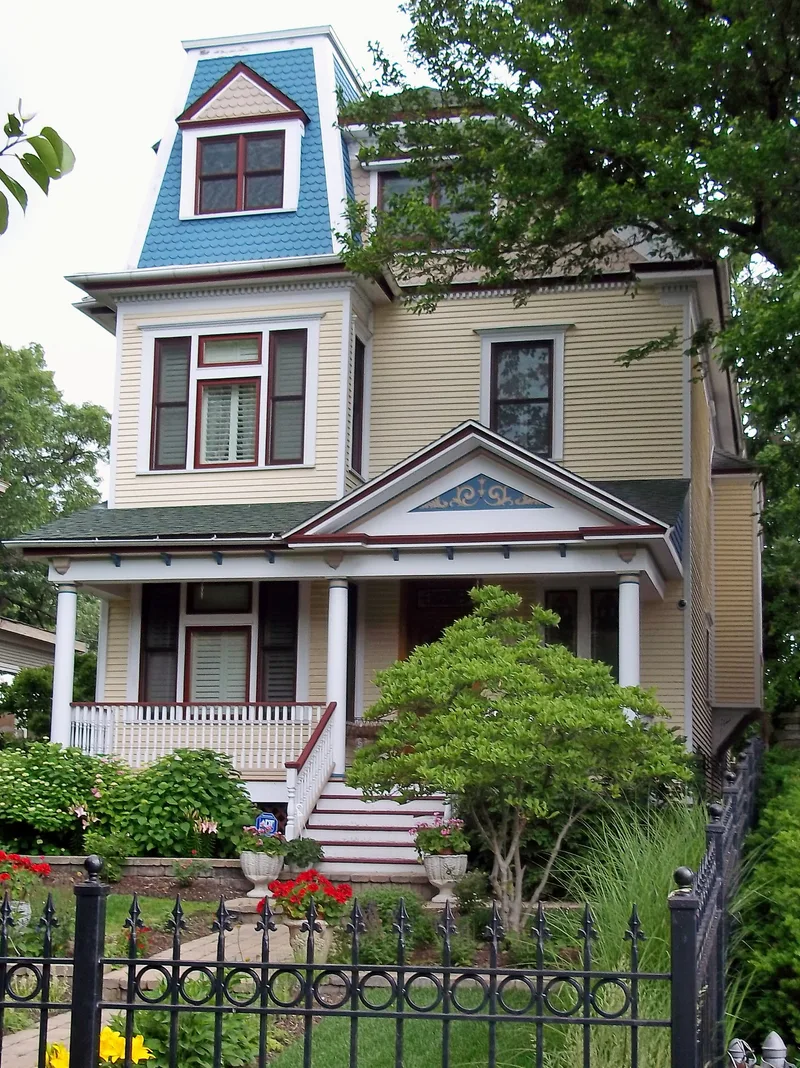
Sheridan Park is a Chicago residential neighborhood on the city's north side, lying along a sandy ridge between Graceland and St. Boniface cemeteries. Its 369 buildings were put up between 1891 and 1929 on large lots, mostly fifty feet wide, laid out by early subdividers. Large suburban-style Victorian houses came first, followed by walk-up apartments, especially six-flats, of which 103 remain. A small number of courtyard buildings and apartment hotels, including the twelve-story Norman Hotel, came in the 1910s and 1920s. Dover Street, resubdivided into narrower lots, has a smaller scale and a more English-influenced character. Consistent setbacks and building heights hold the area together despite its variety. Postwar conversions to rooming houses, resided frame houses, lost cornices and vacant land have affected some blocks. Only fifteen buildings are counted as intrusive, and the nomination treats that as evidence of the district's integrity. Local opinion on listing was divided at the time.
Machine-generated summary. This summary was generated by a language model from the official nomination document and has not been reviewed line by line by an editor. It may contain errors. Check the source document before relying on any detail. Source: nomination document (PDF) · catalog entry. Generated October 2026 (model claude-sonnet-5-5, prompt v1.0-2026-10-29).
| Styles | Mixed Victorian-era styles (stick, shingle, Queen Anne, Colonial Revival), Tudor/Gothic elements, Prairie School, six-flats, courtyard apartments and apartment hotels |
|---|---|
| Areas of significance | Community Planning and Development, Architecture |
| Acreage | 117 |
| Boundary source | NPS cultural-resource GIS polygon |
| Full listing page | Sheridan Park Historic District (property record) |
What listing means for this property
This is a historic district. Buildings within its boundary are either contributing (they add to the district's significance) or non-contributing. Owners of contributing income-producing buildings can claim the 20% federal rehabilitation tax credit; homeowners should look at state credits. National Register districts impose no design review by themselves; a local historic district ordinance, if one exists, does (the difference explained).
General information, not legal or tax advice. Rules change; confirm with your State Historic Preservation Office or a qualified adviser.