North Mayfair Bungalow Historic District

Why it's listed
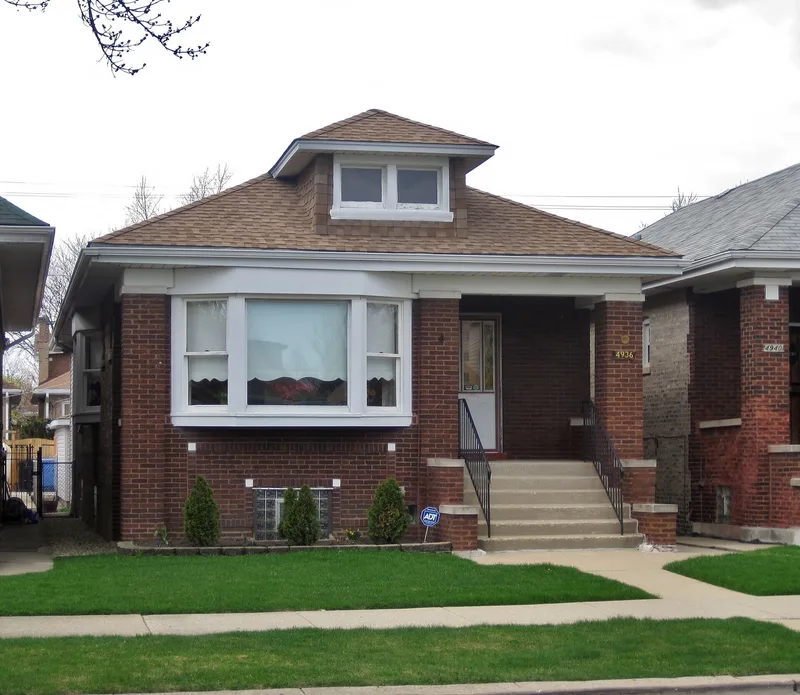
North Mayfair is a quiet residential neighborhood on Chicago's northwest side, about nine miles from the city center, made up largely of red brick bungalows with limestone trim. Most of its buildings went up between 1913 and 1930, with construction peaking in 1923. Of the 782 resources dating from that period, 575 are brick bungalows, mixed with two- and three-flat apartment buildings, Tudor Revival cottages and about 185 garages. Lots are narrow and buildings sit about fifteen feet from the street, creating a uniform streetscape. Architects such as Ernest Braucher and Benedict Bruns designed more than 140 of the homes, while developers like Fred Cooper and Gustav Anderson built whole blocks. The district was recognized for its role in encouraging single-family homeownership for working-class families and for its well-preserved, consistent architecture. Its strictly residential layout also contrasted with nineteenth-century Chicago neighborhoods, where homes, shops and industry overlapped.
Machine-generated summary. This summary was generated by a language model from the official nomination document and has not been reviewed line by line by an editor. It may contain errors. Check the source document before relying on any detail. Source: nomination document (PDF) · catalog entry. Generated October 2026 (model claude-sonnet-5-5, prompt v1.0-2026-10-29).
| Period of significance | 1913-1930 |
|---|---|
| Styles | Other: Chicago Bungalow |
| Areas of significance | Community Planning and Development, Architecture |
| Acreage | 140 |
| Boundary source | NPS cultural-resource GIS polygon |
| Full listing page | North Mayfair Bungalow Historic District (property record) |
What listing means for this property
This is a historic district. Buildings within its boundary are either contributing (they add to the district's significance) or non-contributing. Owners of contributing income-producing buildings can claim the 20% federal rehabilitation tax credit; homeowners should look at state credits. National Register districts impose no design review by themselves; a local historic district ordinance, if one exists, does (the difference explained).
General information, not legal or tax advice. Rules change; confirm with your State Historic Preservation Office or a qualified adviser.