Buena Park Historic District

Why it's listed
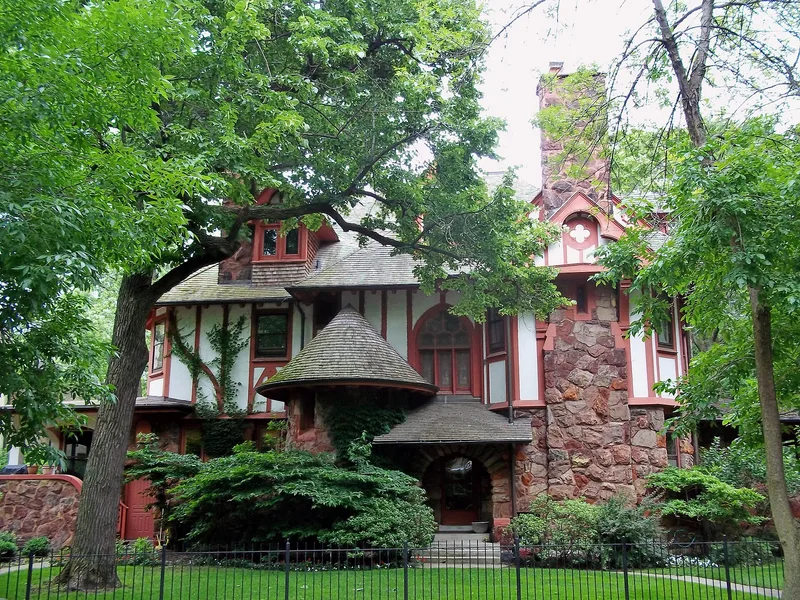
Buena Park is a 326-acre neighborhood on Chicago's lakefront, about five and one-half miles north of downtown. Its roughly 400 buildings are mostly brick and mostly residential. Three- and four-story apartment buildings predominate, built chiefly between 1900 and 1920, with several larger apartment buildings and hotels added in the 1920s. Detached single-family houses, mainly dating from 1890 to 1915, form nearly continuous rows along Hutchinson Street, Hazel Street and a block of Junior Terrace. The area was listed for the quality and variety of its architecture, which shows the move from picturesque Queen Anne and Shingle Style designs to the more symmetrical Prairie School and Classical Revival styles. Many buildings use brick in white, buff, tan, red, orange, gray and gold. Curving streets, a diagonal Broadway, and clear edges at Graceland Cemetery, Lake Michigan, Montrose Avenue and Irving Park Road give the district a distinct identity, though tall modern apartment towers intrude in places.
Machine-generated summary. This summary was generated by a language model from the official nomination document and has not been reviewed line by line by an editor. It may contain errors. Check the source document before relying on any detail. Source: nomination document (PDF) · catalog entry. Generated October 2026 (model claude-sonnet-5-5, prompt v1.0-2026-10-29).
| Styles | Varied: Queen Anne, Shingle Style, Prairie School, Classical Revival, Georgian Revival |
|---|---|
| Areas of significance | Community Planning and Development, Architecture |
| Acreage | 326 |
| Boundary source | NPS cultural-resource GIS polygon |
| Full listing page | Buena Park Historic District (property record) |
What listing means for this property
This is a historic district. Buildings within its boundary are either contributing (they add to the district's significance) or non-contributing. Owners of contributing income-producing buildings can claim the 20% federal rehabilitation tax credit; homeowners should look at state credits. National Register districts impose no design review by themselves; a local historic district ordinance, if one exists, does (the difference explained).
General information, not legal or tax advice. Rules change; confirm with your State Historic Preservation Office or a qualified adviser.