Bryn Mawr Avenue Historic District (Additional Documentation)

Why it's listed
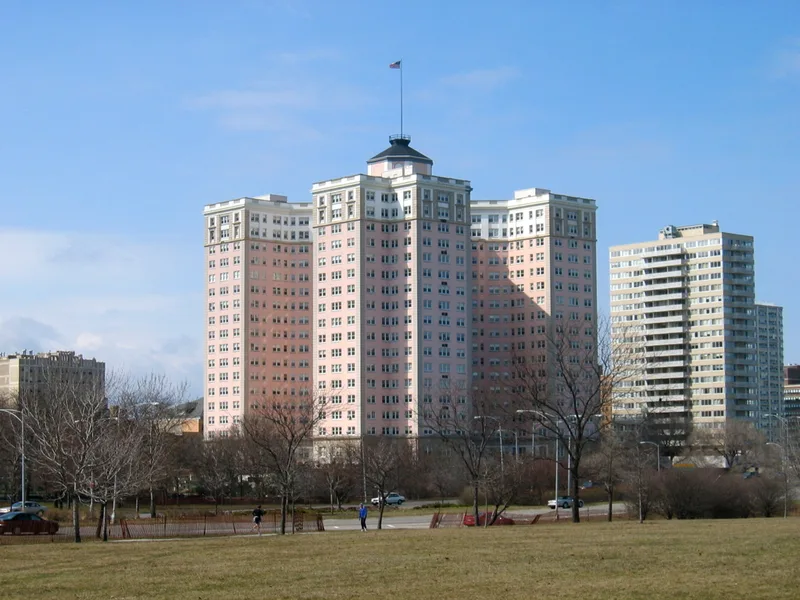
Bryn Mawr Avenue, between Sheridan Road and Broadway in Chicago's Edgewater neighborhood, forms a dense streetscape of twenty-three buildings and a four-track elevated railway bridge. Most are brick and terra cotta, rising from one to nineteen stories, and nearly all have shops at street level. Many combine stores with apartments, a hybrid form that became unusual in Chicago as commercial and residential districts were separated. Early walk-up store-and-flat buildings from the late 1890s sit alongside 1920s elevator apartment hotels. Styles include Tudor Revival, Late Gothic, Italian Renaissance, Art Deco and Moderne. Notable examples include the 1908 Manor House by J. E. O. Pridmore and the nineteen-story Edgewater Beach Apartments by Benjamin Marshall. Zoning in the 1920s allowed mixed uses on only a few streets, encouraging this development near Lake Michigan and the elevated line. The district was recognized for its architecture and its role in community planning, with a period of significance from 1897 to 1935.
Machine-generated summary. This summary was generated by a language model from the official nomination document and has not been reviewed line by line by an editor. It may contain errors. Check the source document before relying on any detail. Source: nomination document (PDF) · catalog entry. Generated October 2026 (model claude-sonnet-5-5, prompt v1.0-2026-10-29).
| Period of significance | 1897-1935 |
|---|---|
| Styles | Late 19th and 20th Century Revivals (Tudor, Late Gothic, Italian Renaissance); Modern Movement (Art Deco, Moderne); Commercial Style |
| Areas of significance | Architecture, Community Planning and Development |
| Acreage | 9.3 |
| Boundary source | NPS cultural-resource GIS polygon |
| Full listing page | Bryn Mawr Avenue Historic District (Additional Documentation) (property record) |
What listing means for this property
This is a historic district. Buildings within its boundary are either contributing (they add to the district's significance) or non-contributing. Owners of contributing income-producing buildings can claim the 20% federal rehabilitation tax credit; homeowners should look at state credits. National Register districts impose no design review by themselves; a local historic district ordinance, if one exists, does (the difference explained).
General information, not legal or tax advice. Rules change; confirm with your State Historic Preservation Office or a qualified adviser.