Bohemian National Cemetery

Why it's listed
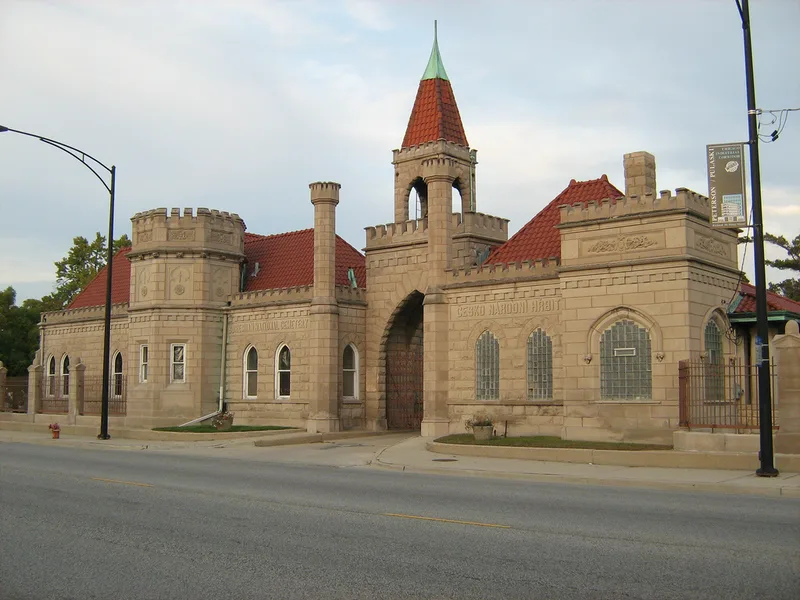
Bohemian National Cemetery occupies about 126 acres on Chicago's northwest side, entered through a medieval-revival limestone gatehouse on Pulaski Road. It was laid out in three stages: a grid plan by John V. Benes in 1878, a curving eastern and southern extension by August Petrtyl in 1903, and a northern section by Jens Jensen in 1906. The grounds hold 64 resources, including a gatehouse, administration building, domed Renaissance Revival crematorium and columbarium, a 1950 water tower group, and 48 private family mausoleums in varied revival styles. Six major public monuments mark the community's values, among them the Klacel bust, a Civil War soldier, the Mother Monument by Albin Polasek, and memorials to Spanish War, Odd Fellows and World War veterans. The cemetery was listed as the principal burial ground and gathering place of Chicago's Czech-American community, reflecting its ethnic heritage, patriotism, fraternal life and freethought traditions.
Machine-generated summary. This summary was generated by a language model from the official nomination document and has not been reviewed line by line by an editor. It may contain errors. Check the source document before relying on any detail. Source: nomination document (PDF) · catalog entry. Generated October 2026 (model claude-sonnet-5-5, prompt v1.0-2026-10-29).
| Styles | Renaissance Revival, Classical Revival, Beaux Arts, Gothic Revival |
|---|---|
| Areas of significance | Ethnic Heritage, Architecture, Art, Landscape Architecture |
| Acreage | 126 |
| Boundary source | NPS cultural-resource GIS polygon |
| Full listing page | Bohemian National Cemetery (property record) |
What listing means for this property
This is a historic district. Buildings within its boundary are either contributing (they add to the district's significance) or non-contributing. Owners of contributing income-producing buildings can claim the 20% federal rehabilitation tax credit; homeowners should look at state credits. National Register districts impose no design review by themselves; a local historic district ordinance, if one exists, does (the difference explained).
General information, not legal or tax advice. Rules change; confirm with your State Historic Preservation Office or a qualified adviser.