Wynn's Hill-Overlook-Oak Circle Historic District

Why it's listed
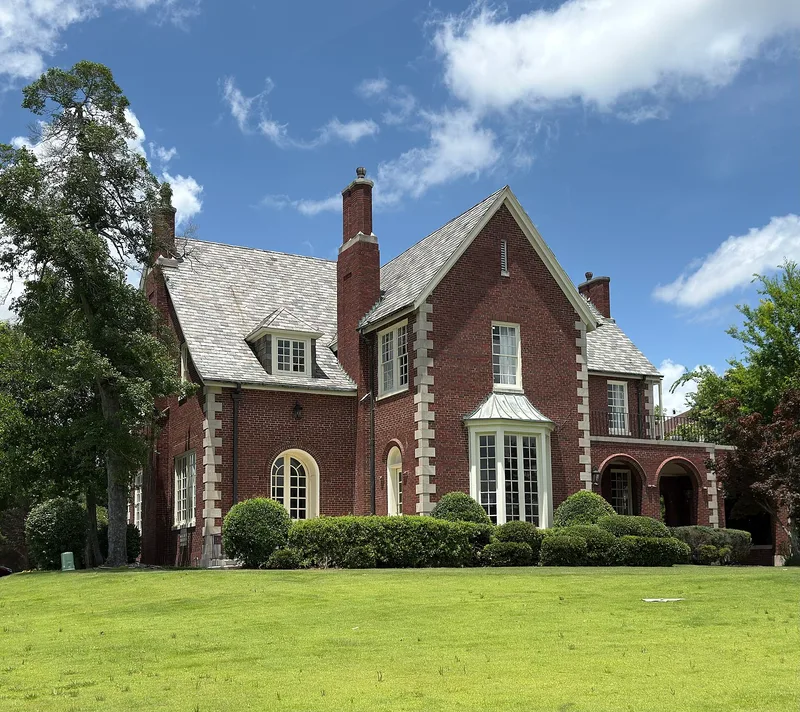
East of downtown Columbus, Georgia, this neighborhood grew from the antebellum estates of Colonel William L. Wynn and John R. Dawson. Their houses, the Wynn House and Gordonido, still stand along Wynnton Road. In the 1920s the surrounding land was subdivided as the Overlook and Oak Circle neighborhoods. Landscape architect Earle S. Draper planned Overlook in 1925 with curvilinear streets, parks and grassed medians, giving it an Olmstedian character. The district has 166 contributing resources, mostly houses built between about 1920 and 1955. They include Colonial Revival, Tudor Revival, Mediterranean Revival, Craftsman bungalow and ranch designs, many by Columbus architects such as Charles F. Hickman, F. Roy Duncan and T. Firth Lockwood. Gardens by the Olmsted Brothers firm survive on the Columbus Museum grounds and at a private residence, and Sarling Park, a memorial fountain park, dates to 1929. Mature water oaks line the streets, and the neighborhood keeps its uniform setbacks and informal landscaping.
Machine-generated summary. This summary was generated by a language model from the official nomination document and has not been reviewed line by line by an editor. It may contain errors. Check the source document before relying on any detail. Source: nomination document (PDF) · catalog entry. Generated October 2026 (model claude-sonnet-5-5, prompt v1.0-2026-10-29).
| Styles | Greek Revival, Colonial Revival, Tudor Revival, Mediterranean Revival, Bungalow/Craftsman, ranch |
|---|---|
| Areas of significance | Architecture, Community Planning and Development, Landscape Architecture |
| Acreage | 124 |
| Boundary source | NPS cultural-resource GIS polygon |
| Full listing page | Wynn's Hill-Overlook-Oak Circle Historic District (property record) |
What listing means for this property
This is a historic district. Buildings within its boundary are either contributing (they add to the district's significance) or non-contributing. Owners of contributing income-producing buildings can claim the 20% federal rehabilitation tax credit; homeowners should look at state credits. National Register districts impose no design review by themselves; a local historic district ordinance, if one exists, does (the difference explained).
General information, not legal or tax advice. Rules change; confirm with your State Historic Preservation Office or a qualified adviser.