Waverly Terrace

Why it's listed
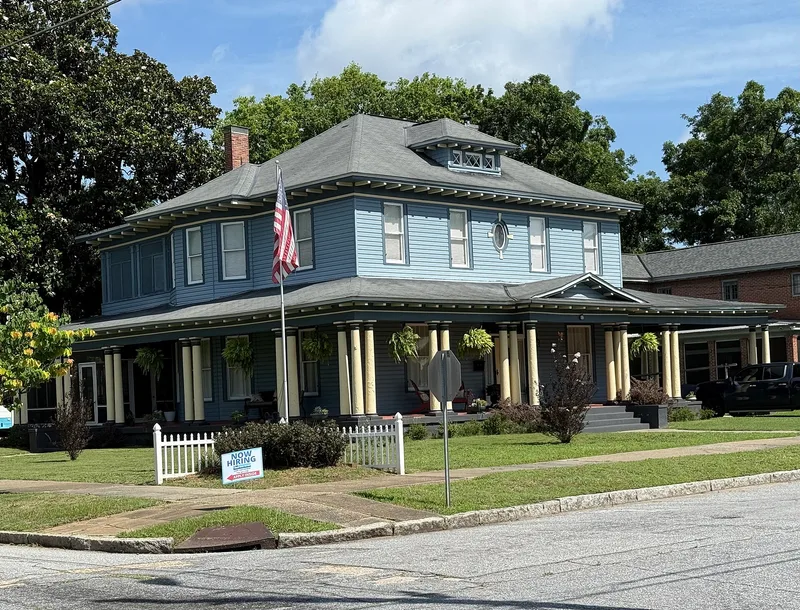
Waverly Terrace is a planned residential suburb in the highlands of Columbus, Georgia, about a mile and a half north-northeast of downtown. Industrialist G. Gunby Jordan deeded his Waverly Farm to the Jordan Company in 1904, and a final survey in 1906 set out the present gridiron of streets. Water, sewer and electric lines were installed when the streets were graded, and streetcars connected the neighborhood to downtown. Most houses date from 1906 to 1929 and are one to two stories, chiefly Craftsman/Bungalow, with some Spanish Mission, late Victorian, Neoclassical and Georgian Revival influences. Front porches, terraced yards with low retaining walls, street trees, stone curbs and concrete sidewalks give the area a consistent character. Architect Thomas W. Smith designed the Waverly Terrace School, the Congregational Church, his own home and other houses. The district also contains the 1906 Secondary Industrial School, an early vocational education institution, and was home to many of the city's middle-class professionals, managers and tradesmen.
Machine-generated summary. This summary was generated by a language model from the official nomination document and has not been reviewed line by line by an editor. It may contain errors. Check the source document before relying on any detail. Source: nomination document (PDF) · catalog entry. Generated October 2026 (model claude-sonnet-5-5, prompt v1.0-2026-10-29).
| Period of significance | 1906-1929 |
|---|---|
| Styles | Craftsman/Bungalow, with Spanish Mission, late Victorian, Neoclassical and Georgian Revival influences |
| Areas of significance | Community Planning and Development, Architecture |
| Acreage | 45 |
| Boundary source | NPS cultural-resource GIS polygon |
| Full listing page | Waverly Terrace (property record) |
What listing means for this property
This is a historic district. Buildings within its boundary are either contributing (they add to the district's significance) or non-contributing. Owners of contributing income-producing buildings can claim the 20% federal rehabilitation tax credit; homeowners should look at state credits. National Register districts impose no design review by themselves; a local historic district ordinance, if one exists, does (the difference explained).
General information, not legal or tax advice. Rules change; confirm with your State Historic Preservation Office or a qualified adviser.