Vernon Road Historic District

Why it's listed
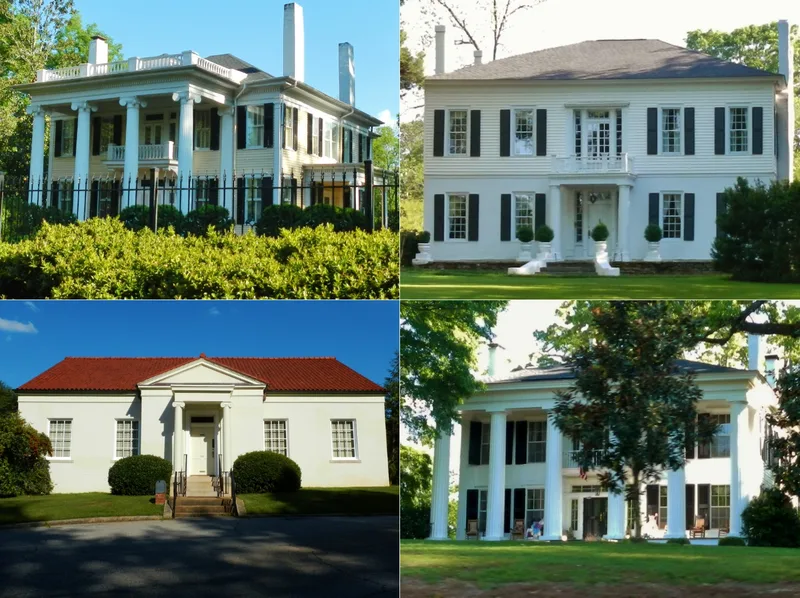
Vernon Road in LaGrange, Georgia, began as a country highway at the edge of town and is now lined with houses from the early 19th to early 20th centuries. The historic district covers about 130 acres west of LaGrange College and consists almost entirely of single-family homes, from small cottages to two-story mansions. Styles include Greek Revival, Victorian Eclectic, Neoclassical, Georgian Revival, Bungalow and English Tudor. Some houses came from local carpenter-builders, while others were designed by noted Georgia architects such as Neel Reid, who designed the Hills and Dales estate. Early landholders built substantial houses here, including the Ferrell-Holder House and The Oaks, and the area was folded into the city in 1920. Informal tree-shaded yards create a park-like setting, and Hills and Dales preserves the Ferrell boxwood gardens. The district was also home to many of LaGrange's leading citizens, including the Calloway mill family.
Machine-generated summary. This summary was generated by a language model from the official nomination document and has not been reviewed line by line by an editor. It may contain errors. Check the source document before relying on any detail. Source: nomination document (PDF) · catalog entry. Generated October 2026 (model claude-sonnet-5-5, prompt v1.0-2026-10-29).
| Period of significance | early 19th-early 20th centuries |
|---|---|
| Styles | Greek Revival, Victorian Eclectic, Neoclassical, Georgian Revival, Bungalow/Craftsman, English Tudor |
| Areas of significance | Landscape Architecture, Exploration/Settlement, Architecture |
| Acreage | 130 |
| Boundary source | NPS cultural-resource GIS polygon |
| Full listing page | Vernon Road Historic District (property record) |
What listing means for this property
This is a historic district. Buildings within its boundary are either contributing (they add to the district's significance) or non-contributing. Owners of contributing income-producing buildings can claim the 20% federal rehabilitation tax credit; homeowners should look at state credits. National Register districts impose no design review by themselves; a local historic district ordinance, if one exists, does (the difference explained).
General information, not legal or tax advice. Rules change; confirm with your State Historic Preservation Office or a qualified adviser.