Tifton Residential Historic District

Why it's listed
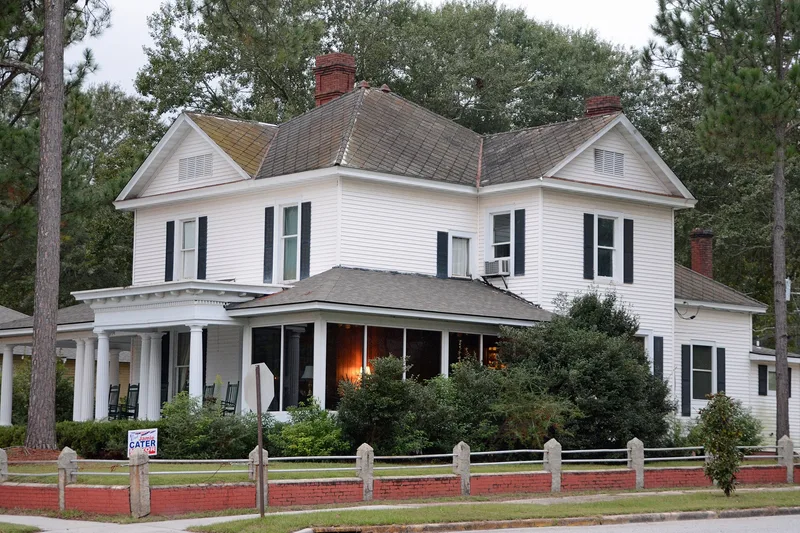
Tifton's residential historic district covers the neighborhoods north and northwest of downtown, platted on a grid around 1888-1890 from land owned by town founder Henry Harding Tift. Blocks were divided into 100-by-200-foot lots with rear lanes, and the streets are an unusually wide 90 feet. The district holds 628 contributing resources, mostly houses built from the late 1880s to the early 1950s. Queen Anne houses with corner turrets stand near the oldest blocks on Love Avenue, while Craftsman bungalows are the most common style. Folk Victorian, Neoclassical and Colonial Revival, English Vernacular Revival, Prairie-influenced, American Small House and ranch examples also appear. Landmarks include several churches, the former high school and junior high school, a 1937 Coca-Cola Bottling Plant, and the 42-acre Fulwood Park. Tourist-related buildings along U.S. Highway 41 record the road's importance from the 1920s. The district illustrates Tifton's shift from timber to agriculture and its growth as a small Georgia city.
Machine-generated summary. This summary was generated by a language model from the official nomination document and has not been reviewed line by line by an editor. It may contain errors. Check the source document before relying on any detail. Source: nomination document (PDF) · catalog entry. Generated October 2026 (model claude-sonnet-5-5, prompt v1.0-2026-10-29).
| Styles | Queen Anne, Folk Victorian, Classical/Neoclassical Revival, Colonial Revival, Tudor Revival (English Vernacular Revival), Bungalow/Craftsman, American Small House, Ranch house |
|---|---|
| Areas of significance | Architecture, Entertainment/Recreation, Landscape Architecture, Transportation |
| Acreage | 614 |
| Boundary source | NPS cultural-resource GIS polygon |
| Full listing page | Tifton Residential Historic District (property record) |
What listing means for this property
This is a historic district. Buildings within its boundary are either contributing (they add to the district's significance) or non-contributing. Owners of contributing income-producing buildings can claim the 20% federal rehabilitation tax credit; homeowners should look at state credits. National Register districts impose no design review by themselves; a local historic district ordinance, if one exists, does (the difference explained).
General information, not legal or tax advice. Rules change; confirm with your State Historic Preservation Office or a qualified adviser.