Savannah Victorian Historic District (Boundary Increase)

Why it's listed
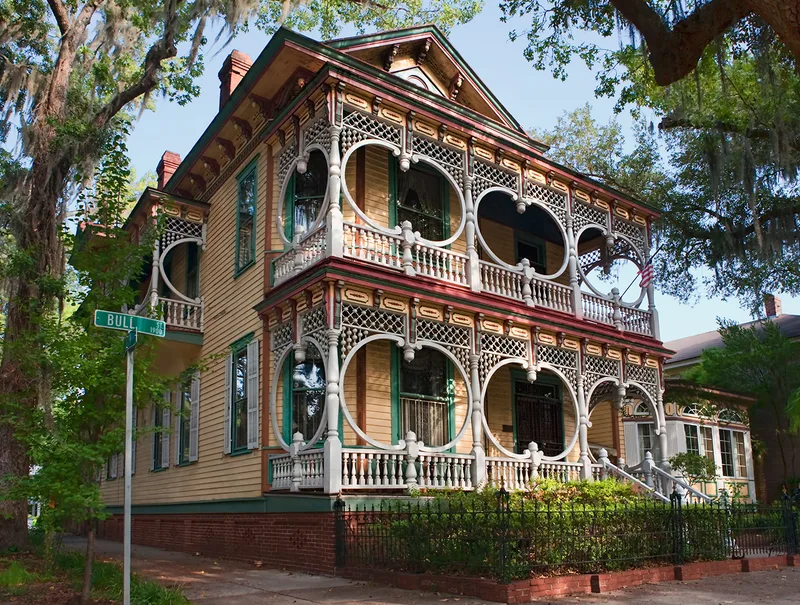
This boundary increase enlarges the Savannah Victorian Historic District to match Savannah's 1870 city limits, adding blocks on the east and west sides. The area follows a rigid gridiron of streets and alleys with long, narrow lots, laid out after Oglethorpe's original city plan was set aside. Most buildings are two-story wood-frame houses from the late nineteenth and early twentieth centuries, ranging from large residences to small shotgun cottages, with a few commercial buildings, a park and a library. Wood construction reflects the area's location outside the city fire limits. Most houses drew on pattern books and were built by contractors, though some, such as the 1916 Edwardian house at 525 East Henry Street by Percy Sugden, were high style. The eastern blocks were home to black professional and working-class families, and the 1913-1914 Carnegie Library served the black community. Dixon Park dates from 1906. Modern commercial intrusions along West Broad Street are included to complete the 1870 boundary.
Machine-generated summary. This summary was generated by a language model from the official nomination document and has not been reviewed line by line by an editor. It may contain errors. Check the source document before relying on any detail. Source: nomination document (PDF) · catalog entry. Generated October 2026 (model claude-sonnet-5-5, prompt v1.0-2026-10-29).
| Period of significance | 1800-1899, 1900- |
|---|---|
| Styles | Late-nineteenth-century Victorian, turn-of-the-century Neoclassical, and early-twentieth-century period styles |
| Areas of significance | Landscape Architecture, Architecture |
| Acreage | 34 |
| Boundary source | NPS cultural-resource GIS polygon |
| Full listing page | Savannah Victorian Historic District (Boundary Increase) (property record) |
What listing means for this property
This is a historic district. Buildings within its boundary are either contributing (they add to the district's significance) or non-contributing. Owners of contributing income-producing buildings can claim the 20% federal rehabilitation tax credit; homeowners should look at state credits. National Register districts impose no design review by themselves; a local historic district ordinance, if one exists, does (the difference explained).
General information, not legal or tax advice. Rules change; confirm with your State Historic Preservation Office or a qualified adviser.