Piedmont Park

Why it's listed
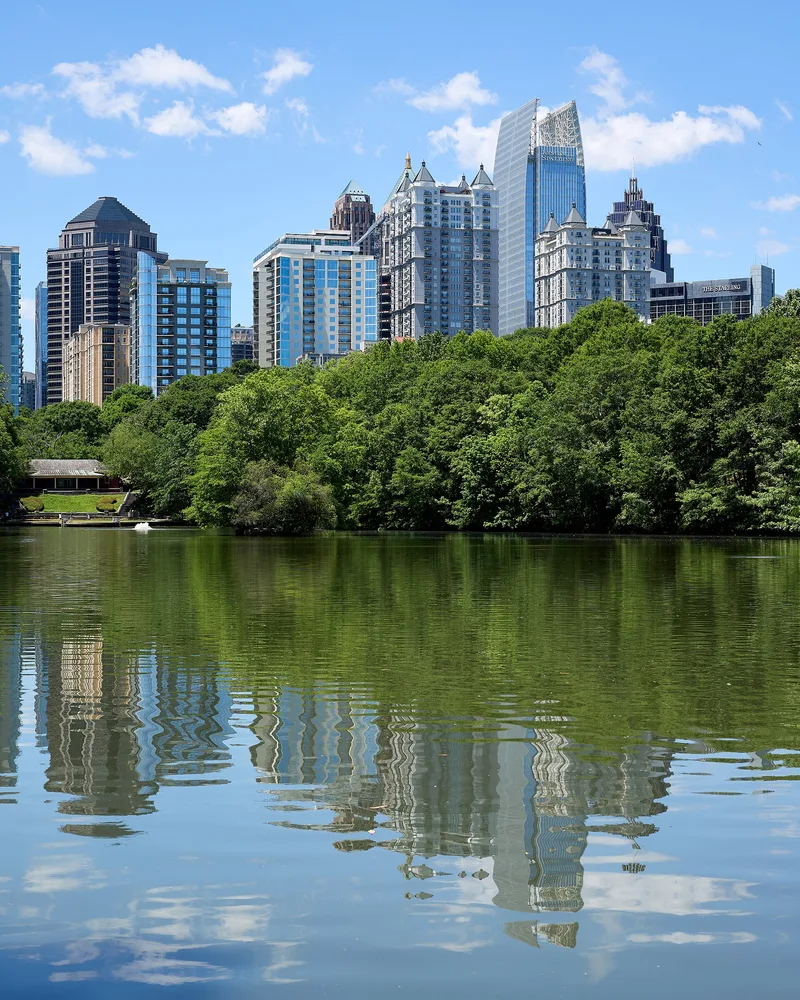
Piedmont Park covers 185 acres in northeast Atlanta, bounded by Tenth Street, Piedmont Road and the Southern Railway line. The land first served as the driving grounds of a gentlemen's club, then as the site of the 1895 Cotton States and International Exposition, which ran for 100 days. Atlanta bought the grounds in 1904 for a city park. Frederick Law Olmsted, Sr. advised on the Exposition plan in 1894, though a local engineer, Grant Wilkins, drew the plan actually used. In 1910 Olmsted Brothers produced a plan of improvement that reshaped the lake, added formal gardens, recreation areas, a golf course and a five-mile driveway, and reused the Exposition's stone stairways and circular urns. Features today include a lake, a meadow, a bandstand and a Peace Monument placed in 1911. The park was listed because it reflects Olmsted's belief that carefully planned parks benefit the health and welfare of city residents.
Machine-generated summary. This summary was generated by a language model from the official nomination document and has not been reviewed line by line by an editor. It may contain errors. Check the source document before relying on any detail. Source: nomination document (PDF) · catalog entry. Generated October 2026 (model claude-sonnet-5-5, prompt v1.0-2026-10-29).
| Period of significance | 1895-1910 |
|---|---|
| Areas of significance | Community Planning and Development, Landscape Architecture |
| Acreage | 185 |
| Boundary source | NPS cultural-resource GIS polygon |
| Full listing page | Piedmont Park (property record) |
What listing means for this property
This is a historic district. Buildings within its boundary are either contributing (they add to the district's significance) or non-contributing. Owners of contributing income-producing buildings can claim the 20% federal rehabilitation tax credit; homeowners should look at state credits. National Register districts impose no design review by themselves; a local historic district ordinance, if one exists, does (the difference explained).
General information, not legal or tax advice. Rules change; confirm with your State Historic Preservation Office or a qualified adviser.