McDonough Historic District

Why it's listed
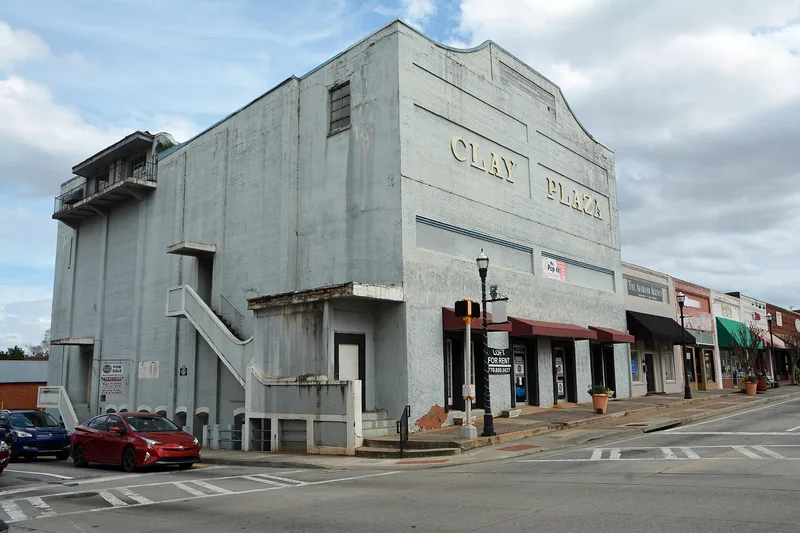
McDonough's historic core is a T-shaped district in the center of Henry County, Georgia, laid out on a gridiron around the courthouse square. The square holds the 1897 Richardsonian Romanesque courthouse, a Confederate monument dedicated in 1910, and oak shade trees. Around it stand attached one- and two-story brick stores, many built by local businessman H. P. Copeland, with corbelled brickwork typical of the turn of the 20th century. Residential streets extend in several directions, with Queen Anne, Classical Revival, Craftsman, English Vernacular Revival and ranch houses, plus a small African-American neighborhood and city cemetery. Churches include Presbyterian, Baptist, Methodist and Shiloh Baptist congregations. Founded in 1823, the town declined for decades after a railroad bypassed it in 1846, then revived when a rail line reached it in 1881. The district preserves the buildings from that recovery, along with the early Globe Hotel and Brown House, and later examples such as a 1950 service station and an International Style grocery.
Machine-generated summary. This summary was generated by a language model from the official nomination document and has not been reviewed line by line by an editor. It may contain errors. Check the source document before relying on any detail. Source: nomination document (PDF) · catalog entry. Generated October 2026 (model claude-sonnet-5-5, prompt v1.0-2026-10-29).
| Styles | Federal, Greek Revival, Gothic Revival, Italianate, Queen Anne, Romanesque, Neoclassical and Classical Revival, Colonial Revival, Commercial Style, Bungalow/Craftsman, International Style |
|---|---|
| Areas of significance | Architecture, Commerce, Community Planning and Development, Politics/Government |
| Acreage | 200 |
| Boundary source | NPS cultural-resource GIS polygon |
| Full listing page | McDonough Historic District (property record) |
What listing means for this property
This is a historic district. Buildings within its boundary are either contributing (they add to the district's significance) or non-contributing. Owners of contributing income-producing buildings can claim the 20% federal rehabilitation tax credit; homeowners should look at state credits. National Register districts impose no design review by themselves; a local historic district ordinance, if one exists, does (the difference explained).
General information, not legal or tax advice. Rules change; confirm with your State Historic Preservation Office or a qualified adviser.