East End Historic District

Why it's listed
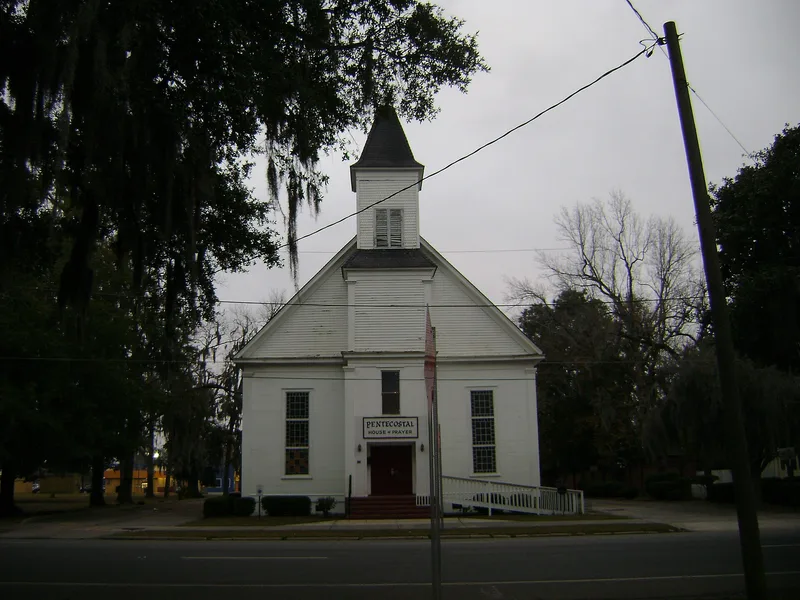
East End is a residential neighborhood two blocks northeast of the Lowndes County courthouse square in Valdosta, Georgia. Its development spans 1869 to 1955 and falls into three areas. Around East End Park, established in 1896, wealthy residents built large Queen Anne and Classical Revival mansions. Farther north, a broad middle-class area filled with one-story frame houses, including gabled-ell houses, Craftsman bungalows, Dutch Colonial Revival houses and, after World War II, American Small Houses. North of Gordon Street, Black workers settled in the early 1900s in small hall-parlor and shotgun houses, including two back-to-back rows of shotguns. Landmarks include the 1869 Primitive Baptist Church, the 1885 Episcopal Church and the 1937 Leila Ellis School, designed by local architect Lloyd Greer. The district was recognized for its architecture and for what it shows about the city's growth and its social and racial makeup. It contains 472 contributing resources.
Machine-generated summary. This summary was generated by a language model from the official nomination document and has not been reviewed line by line by an editor. It may contain errors. Check the source document before relying on any detail. Source: nomination document (PDF) · catalog entry. Generated October 2026 (model claude-sonnet-5-5, prompt v1.0-2026-10-29).
| Period of significance | 1869-1955 |
|---|---|
| Styles | Late Victorian: Queen Anne; Colonial Revival, Classical Revival, Mission/Spanish Colonial Revival, Italian Renaissance; Bungalow/Craftsman; shotgun, hall-parlor, saddlebag, gabled-ell, center-hall-plan, Georgian-plan and American Small House types |
| Areas of significance | Architecture, Community Planning and Development |
| Acreage | 255 |
| Boundary source | NPS cultural-resource GIS polygon |
| Full listing page | East End Historic District (property record) |
What listing means for this property
This is a historic district. Buildings within its boundary are either contributing (they add to the district's significance) or non-contributing. Owners of contributing income-producing buildings can claim the 20% federal rehabilitation tax credit; homeowners should look at state credits. National Register districts impose no design review by themselves; a local historic district ordinance, if one exists, does (the difference explained).
General information, not legal or tax advice. Rules change; confirm with your State Historic Preservation Office or a qualified adviser.