Druid Hills Parks and Parkways

Why it's listed
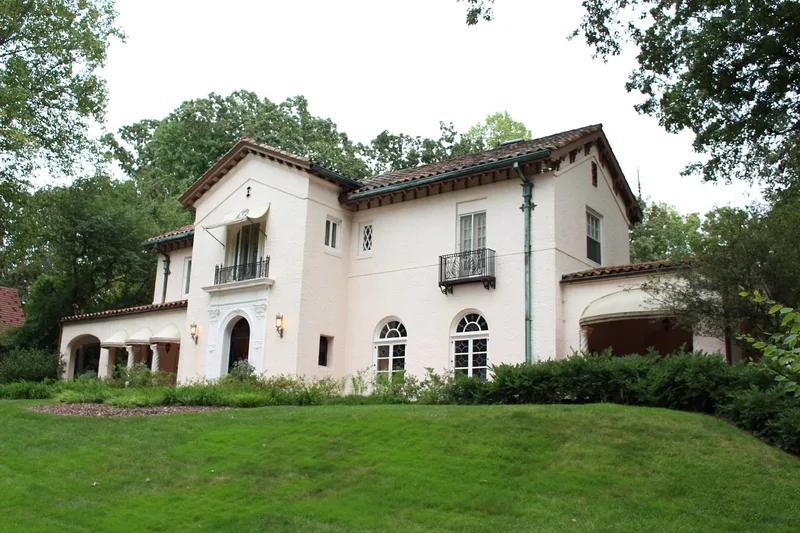
Druid Hills Parks and Parkways is a district of roughly 250 acres in northeast Atlanta, centered on Ponce de Leon Avenue between Briarcliff Road and the Seaboard Coast Line railroad. Gently curving roadways and a string of open parks, including Springdale, Shadyside, Dellwood and the wooded Deepdene, structure the larger residential neighborhood around them. The design traces to Frederick Law Olmsted, Sr., who consulted with developer Joel Hurt between 1890 and 1894 and produced a preliminary plan in 1893. Olmsted Brothers refined the southern portion in 1905. The plan placed the streetcar line in a separate strip beside the road and let the terrain set the route of the parkway. The Druid Hills Corporation, organized in 1909, continued development, though the planned lakes were never built. Large houses along the avenue include residences of Asa G. Candler and James Venable. The nomination stresses the parks' value in guiding the area as density increases.
Machine-generated summary. This summary was generated by a language model from the official nomination document and has not been reviewed line by line by an editor. It may contain errors. Check the source document before relying on any detail. Source: nomination document (PDF) · catalog entry. Generated October 2026 (model claude-sonnet-5-5, prompt v1.0-2026-10-29).
| Period of significance | 1900-1915 |
|---|---|
| Styles | Landscape architecture (Olmsted design); bordering houses in Jacobethan, Italian Renaissance Revival, Georgian Revival, Tudor and Renaissance Revival styles |
| Areas of significance | Community Planning and Development, Landscape Architecture, Architecture, Social History |
| Acreage | 250 |
| Boundary source | NPS cultural-resource GIS polygon |
| Full listing page | Druid Hills Parks and Parkways (property record) |
What listing means for this property
This is a historic district. Buildings within its boundary are either contributing (they add to the district's significance) or non-contributing. Owners of contributing income-producing buildings can claim the 20% federal rehabilitation tax credit; homeowners should look at state credits. National Register districts impose no design review by themselves; a local historic district ordinance, if one exists, does (the difference explained).
General information, not legal or tax advice. Rules change; confirm with your State Historic Preservation Office or a qualified adviser.