Dawson Street Residential Historic District

Why it's listed
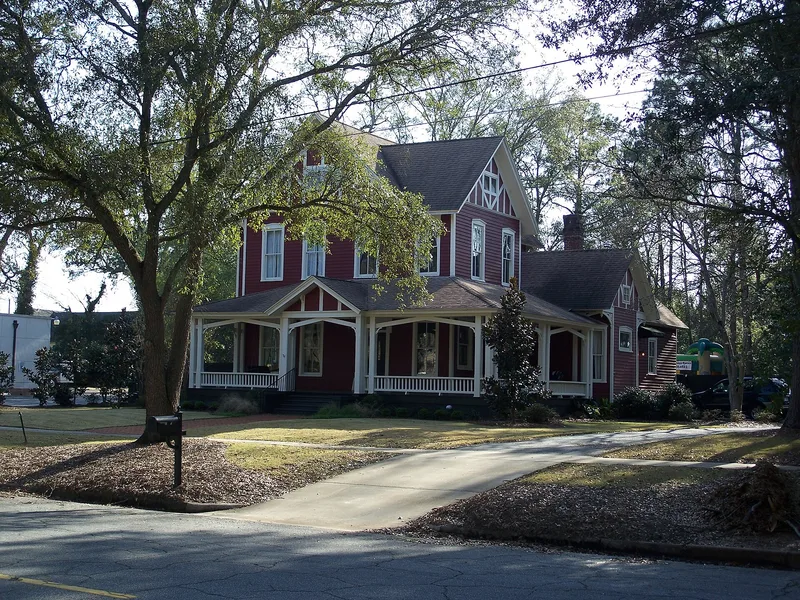
Spread across roughly 200 acres north of Thomasville's commercial center, this neighborhood holds houses built from the 1830s through the 1930s, along with churches, pecan orchards, two historic cemeteries and a city park. It grew step by step as early landholdings were platted and subdivided, and most buildings date from the 1880s to the 1910s, when Thomasville thrived as a winter resort for Northern visitors. Large houses line North Dawson Street, while modest cottages mark historic black settlements and early twentieth-century white middle-class areas. Styles range from Greek Revival to Bungalow/Craftsman. Notable buildings include the 1830s Hardy Bryan House, the 1856 Hardeway House designed by John Wind, and the 1885 Lapham-Patterson House, a National Historic Landmark. Two buildings remain from Young's Female College, and shaded streets and a three-hundred-year-old live oak add to the landscape. The district was listed for its planning, architecture, landscape, education and local history.
Machine-generated summary. This summary was generated by a language model from the official nomination document and has not been reviewed line by line by an editor. It may contain errors. Check the source document before relying on any detail. Source: nomination document (PDF) · catalog entry. Generated October 2026 (model claude-sonnet-5-5, prompt v1.0-2026-10-29).
| Period of significance | 1830s-1930s |
|---|---|
| Styles | Greek Revival, Victorian Eclectic, Neoclassical, Georgian Revival, Bungalow/Craftsman, and vernacular cottages |
| Areas of significance | Community Planning and Development, Landscape Architecture, Education, Architecture |
| Acreage | 200 |
| Boundary source | NPS cultural-resource GIS polygon |
| Full listing page | Dawson Street Residential Historic District (property record) |
What listing means for this property
This is a historic district. Buildings within its boundary are either contributing (they add to the district's significance) or non-contributing. Owners of contributing income-producing buildings can claim the 20% federal rehabilitation tax credit; homeowners should look at state credits. National Register districts impose no design review by themselves; a local historic district ordinance, if one exists, does (the difference explained).
General information, not legal or tax advice. Rules change; confirm with your State Historic Preservation Office or a qualified adviser.