Broad Street Historic District

Why it's listed
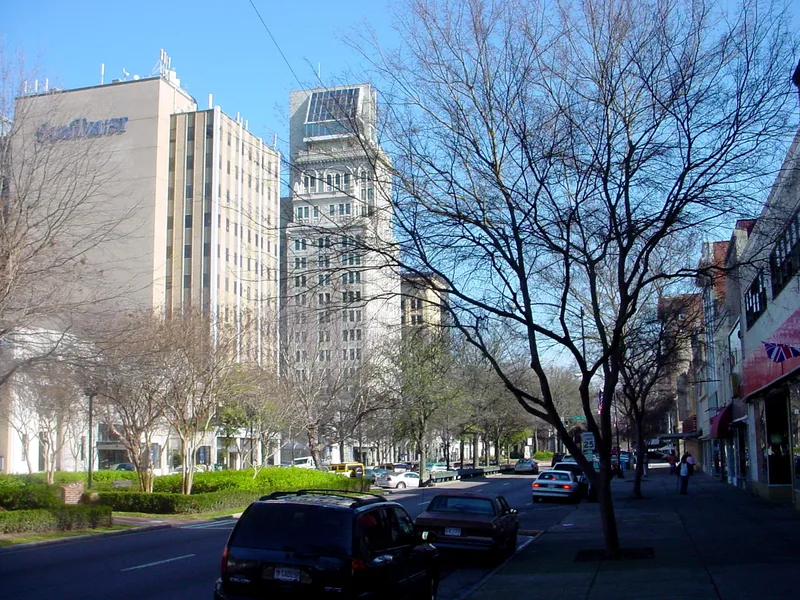
Broad Street is the historic commercial spine of downtown Augusta, Georgia, and this district covers the street from Fifth to Thirteenth streets, with short side extensions along Eighth, Sixth and Ellis streets. Its buildings are mostly one to several stories, built of brick, stone or masonry veneer. They front directly onto the sidewalks and share party walls and a common building line. Together they show many types and styles of commercial architecture from the 1820s through the 1930s, with most dating from around the turn of the century. Two early-twentieth-century skyscrapers stand within it. Notable examples include a row of antebellum and Victorian buildings on the south side of the 500 block, including a three-unit late-Federal townhouse row recorded in a Historic American Buildings Survey, the Second Empire Augusta Hotel, and the Georgian Revival First Bank building. Broad Street itself is wide, divided by parking medians and linear parks, and a modern Chamber of Commerce building stands in the 600 block. A few modern buildings intrude on the older streetscape.
Machine-generated summary. This summary was generated by a language model from the official nomination document and has not been reviewed line by line by an editor. It may contain errors. Check the source document before relying on any detail. Source: nomination document (PDF) · catalog entry. Generated October 2026 (model claude-sonnet-5-5, prompt v1.0-2026-10-29).
| Styles | Varied commercial architecture, including late Federal, Victorian, Second Empire and Georgian Revival buildings |
|---|---|
| Areas of significance | Commerce, Architecture |
| Acreage | 70 |
| Boundary source | NPS cultural-resource GIS polygon |
| Full listing page | Broad Street Historic District (property record) |
What listing means for this property
This is a historic district. Buildings within its boundary are either contributing (they add to the district's significance) or non-contributing. Owners of contributing income-producing buildings can claim the 20% federal rehabilitation tax credit; homeowners should look at state credits. National Register districts impose no design review by themselves; a local historic district ordinance, if one exists, does (the difference explained).
General information, not legal or tax advice. Rules change; confirm with your State Historic Preservation Office or a qualified adviser.