St. James Park Historic District

Why it's listed
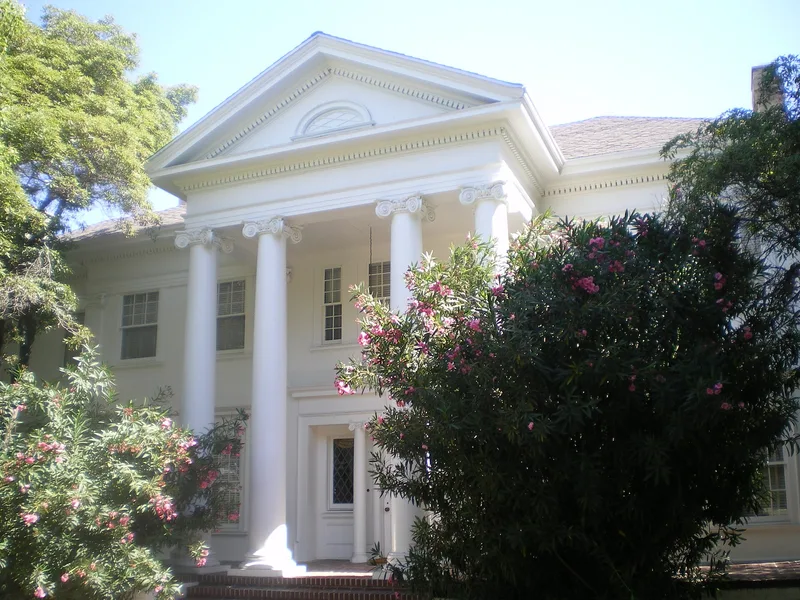
Centered on a small landscaped square laid out in 1887, this residential district sits just southwest of downtown Los Angeles. J. Downey Harvey subdivided the St. James Park Tract as a private residential park modeled on those of St. Louis and Washington, D.C. Surrounding streets, including Scarff, Portland and 23rd and 24th Streets, filled with houses and brick or stucco apartment buildings built between 1887 and the early 1920s. Roughly a quarter of the buildings are Queen Anne or Eastlake in design, about a fifth are Craftsman-influenced, and nearly another fifth are Colonial or Classical Revival. Architects represented include John Parkinson, who designed the Stearns-Dockweiler Residence in 1900, along with John C. Austin and Arthur Benton. The district is regarded as an unusually intact part of the West Adams corridor, with eleven properties already designated as city landmarks. Newer apartments and altered buildings are classed as non-contributing.
Machine-generated summary. This summary was generated by a language model from the official nomination document and has not been reviewed line by line by an editor. It may contain errors. Check the source document before relying on any detail. Source: nomination document (PDF) · catalog entry. Generated October 2026 (model claude-sonnet-5-5, prompt v1.0-2026-10-29).
| Period of significance | 1887-1924 |
|---|---|
| Styles | Queen Anne, Bungalow/Craftsman, Colonial Revival |
| Areas of significance | Industry, Community Planning and Development, Engineering, Education, Architecture, Social History |
| Acreage | 30 |
| Boundary source | NPS cultural-resource GIS polygon |
| Full listing page | St. James Park Historic District (property record) |
What listing means for this property
This is a historic district. Buildings within its boundary are either contributing (they add to the district's significance) or non-contributing. Owners of contributing income-producing buildings can claim the 20% federal rehabilitation tax credit; homeowners should look at state credits. National Register districts impose no design review by themselves; a local historic district ordinance, if one exists, does (the difference explained).
General information, not legal or tax advice. Rules change; confirm with your State Historic Preservation Office or a qualified adviser.