Professorville Historic District

Why it's listed
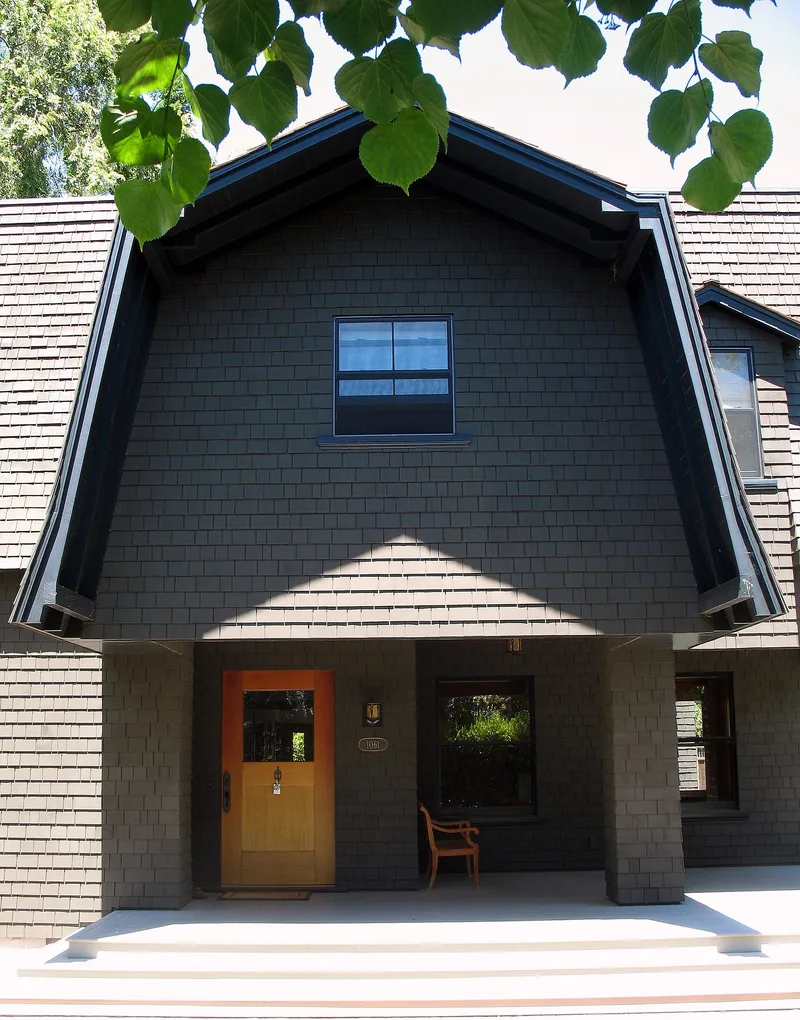
Professorville is a neighborhood of 113 structures in Palo Alto, California, laid out as the home of Stanford University's early faculty. Timothy Hopkins subdivided the land in 1889 for Leland Stanford, and the site offered easy access to campus along Embarcadero Street. Most of the houses date from the late 1890s to the mid 1920s and range from one to two and a half stories. Brown-shingled Colonial Revival and Craftsman designs dominate, with Spanish Colonial Revival, Prairie, Tudor and other examples mixed in. Large lots and mature, traditional plantings give the streets a cohesive character that recalls Eastern and Midwestern cities, reflecting the origins of the professors who settled here. The district was listed for its association with the university's first instructors and, above all, for the consistent quality of its buildings and streetscapes. Notable houses include the Sun-Bonnet House at 1061 Bryant, designed by Bernard Maybeck, and the Varian House at 1044 Bryant. Six buildings are classed as intrusions.
Machine-generated summary. This summary was generated by a language model from the official nomination document and has not been reviewed line by line by an editor. It may contain errors. Check the source document before relying on any detail. Source: nomination document (PDF) · catalog entry. Generated October 2026 (model claude-sonnet-5-5, prompt v1.0-2026-10-29).
| Period of significance | c.1895-1979 |
|---|---|
| Styles | Colonial Revival and Craftsman, with some Spanish Colonial Revival, Period Revival, Classical Revival, Prairie, Queen Anne and Tudor examples |
| Areas of significance | Community Planning and Development, Landscape Architecture, Architecture |
| Acreage | 34.4 |
| Boundary source | NPS cultural-resource GIS polygon |
| Full listing page | Professorville Historic District (property record) |
What listing means for this property
This is a historic district. Buildings within its boundary are either contributing (they add to the district's significance) or non-contributing. Owners of contributing income-producing buildings can claim the 20% federal rehabilitation tax credit; homeowners should look at state credits. National Register districts impose no design review by themselves; a local historic district ordinance, if one exists, does (the difference explained).
General information, not legal or tax advice. Rules change; confirm with your State Historic Preservation Office or a qualified adviser.