Napa Abajo-Fuller Park Historic District

Why it's listed
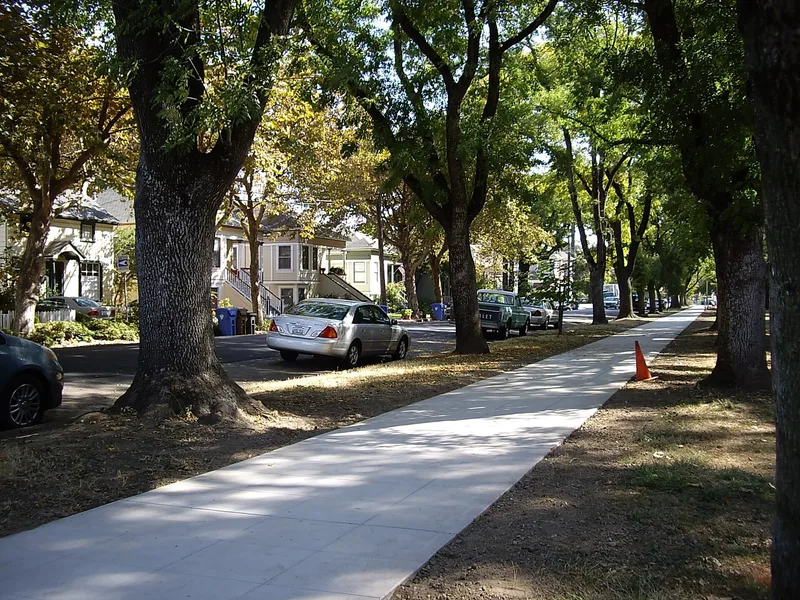
This residential district lies just south of downtown Napa, between Fuller Park and the Napa River. The eastern blocks were part of Napa Abajo, the city's first subdivision, and the western blocks come from three tracts added a few years later. Of the 362 residential buildings facing streets, 249 contribute to its historic character. Houses range from mansions with twenty or more rooms to two-room shotgun and hall-and-parlor dwellings. Stick/Eastlake, Italianate and Queen Anne are the most common nineteenth-century styles, while Colonial Revival and Craftsman dominate the twentieth century. Fuller Park, established in 1905, and a double row of redwoods planted in the 1890s also contribute. Seven houses were already individually listed, including the Manasse Mansion, built in 1886 and designed by William H. Corlett. The district was listed for architecture and social history, covering 1868 to 1918. Its integrity rests on mature street trees, front and side yards, mostly residential use and the retention of original fabric.
Machine-generated summary. This summary was generated by a language model from the official nomination document and has not been reviewed line by line by an editor. It may contain errors. Check the source document before relying on any detail. Source: nomination document (PDF) · catalog entry. Generated October 2026 (model claude-sonnet-5-5, prompt v1.0-2026-10-29).
| Period of significance | 1868-1918 |
|---|---|
| Styles | Late Victorian: Stick/Eastlake; Colonial Revival; Bungalow/Craftsman |
| Areas of significance | Architecture, Social History |
| Acreage | 120 |
| Boundary source | NPS cultural-resource GIS polygon |
| Full listing page | Napa Abajo-Fuller Park Historic District (property record) |
What listing means for this property
This is a historic district. Buildings within its boundary are either contributing (they add to the district's significance) or non-contributing. Owners of contributing income-producing buildings can claim the 20% federal rehabilitation tax credit; homeowners should look at state credits. National Register districts impose no design review by themselves; a local historic district ordinance, if one exists, does (the difference explained).
General information, not legal or tax advice. Rules change; confirm with your State Historic Preservation Office or a qualified adviser.