Golden Gate Park

Why it's listed
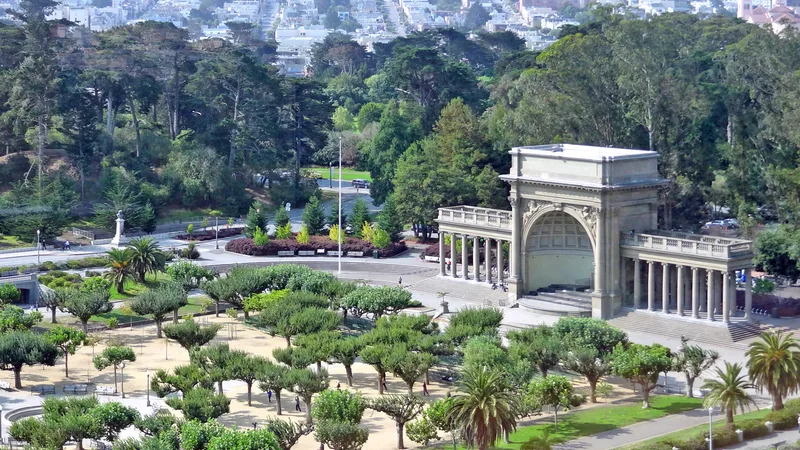
Golden Gate Park covers 1,017 acres on the western side of San Francisco, running about 3.5 miles from the city center to the Pacific Ocean. Surveyed in 1870 by William Hammond Hall on windblown sand dunes known as the Outside Lands, it was transformed through a major reclamation effort into a man-made forest of more than 30,000 trees, broken by open meadows and linked by curving roads and paths. Hall served as the first superintendent, and John McLaren carried the plan forward for 53 years after 1889. The design follows the picturesque tradition influenced by Frederick Law Olmsted Sr. Lakes, gardens, the Conservatory of Flowers, the Music Concourse, the Japanese Tea Garden, monuments, and 1930s public works facilities were added over time. The park was listed as a historic district with 135 contributing resources. Its original spatial layout of forest, meadow and road system remains largely intact, and visitors still picnic, stroll, boat and play sports much as earlier generations did.
Machine-generated summary. This summary was generated by a language model from the official nomination document and has not been reviewed line by line by an editor. It may contain errors. Check the source document before relying on any detail. Source: nomination document (PDF) · catalog entry. Generated October 2026 (model claude-sonnet-5-5, prompt v1.0-2026-10-29).
| Styles | Mid-late 19th Century picturesque park landscape; Olmsted-influenced landscape |
|---|---|
| Areas of significance | Landscape Architecture, Entertainment/Recreation, Social History |
| Acreage | 1017 |
| Boundary source | NPS cultural-resource GIS polygon |
| Full listing page | Golden Gate Park (property record) |
What listing means for this property
This is a historic district. Buildings within its boundary are either contributing (they add to the district's significance) or non-contributing. Owners of contributing income-producing buildings can claim the 20% federal rehabilitation tax credit; homeowners should look at state credits. National Register districts impose no design review by themselves; a local historic district ordinance, if one exists, does (the difference explained).
General information, not legal or tax advice. Rules change; confirm with your State Historic Preservation Office or a qualified adviser.