El Prado Complex

Why it's listed
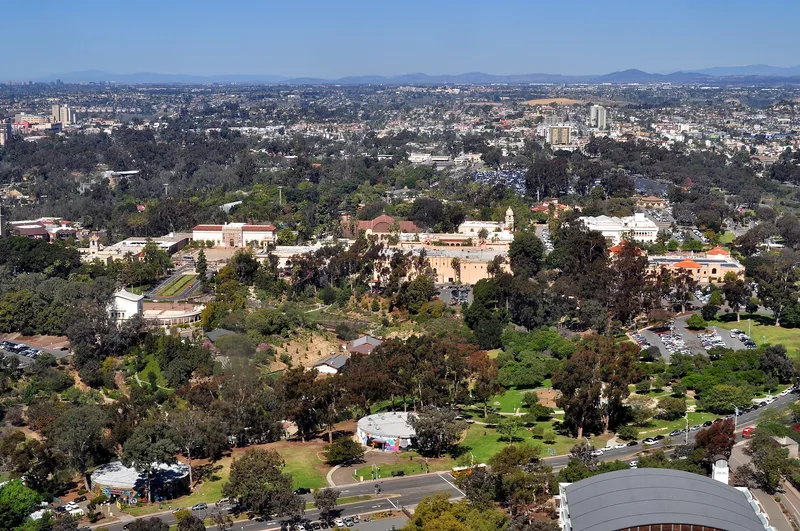
Running through the heart of Balboa Park in San Diego, El Prado is a collection of buildings, gardens, plazas and a long concrete bridge created for the 1915 Panama-California Exposition, which celebrated the opening of the Panama Canal. The group includes the Cabrillo Bridge, House of Charm, House of Hospitality, Electrical Building, Botanical Building, Organ Pavilion, Alcazar Gardens, Plaza de Panama, the arcade, the Fine Arts Gallery and the Natural History Museum. Bertram Goodhue served as chief architect, with Carleton Winslow and Frank Allen Jr. designing many of the major pieces. Several structures were meant to be temporary but were saved and reused for the 1935 California Pacific International Exposition, with some alterations. The ornate Spanish Baroque and Mission-style detail still defines the park. The complex was recognized as the surviving 1915 portion of Balboa Park and as a lasting symbol of San Diego's heritage.
Machine-generated summary. This summary was generated by a language model from the official nomination document and has not been reviewed line by line by an editor. It may contain errors. Check the source document before relying on any detail. Source: nomination document (PDF) · catalog entry. Generated October 2026 (model claude-sonnet-5-5, prompt v1.0-2026-10-29).
| Period of significance | 1915 and 1935 |
|---|---|
| Styles | Spanish Baroque, Mission and Spanish Colonial Revival exposition architecture |
| Areas of significance | Art, Architecture, Social History |
| Acreage | 13 |
| Boundary source | NPS cultural-resource GIS polygon |
| Full listing page | El Prado Complex (property record) |
What listing means for this property
This is a historic district. Buildings within its boundary are either contributing (they add to the district's significance) or non-contributing. Owners of contributing income-producing buildings can claim the 20% federal rehabilitation tax credit; homeowners should look at state credits. National Register districts impose no design review by themselves; a local historic district ordinance, if one exists, does (the difference explained).
General information, not legal or tax advice. Rules change; confirm with your State Historic Preservation Office or a qualified adviser.