Exposition Park Rose Garden

Why it's listed
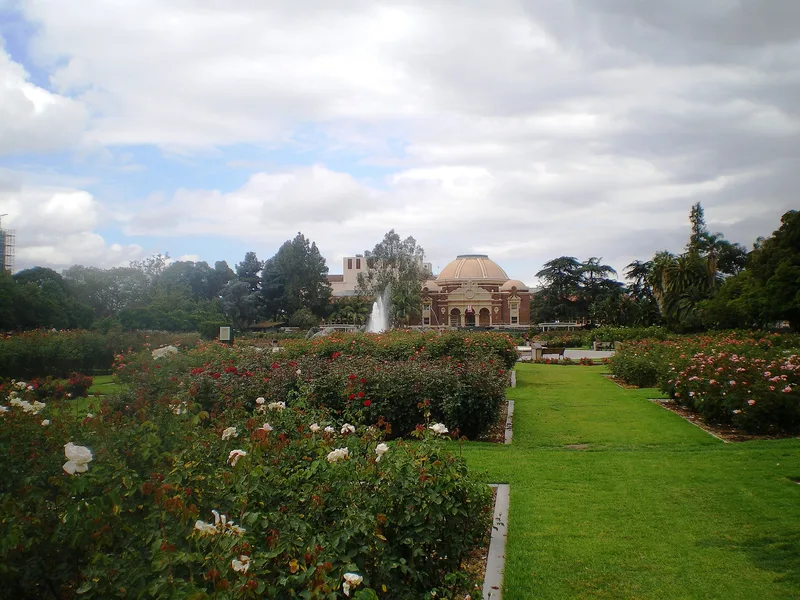
Exposition Park Rose Garden is a seven-acre sunken garden in the north-central part of Exposition Park in Los Angeles. Its interior measures about 861 by 354 feet and sits three feet below the surrounding ground. Four quadrants, each with a wooden gazebo, are arranged around a circular fountain and lily pond, with 166 concrete-lined beds holding about 19,000 rose bushes. A red brick wall from 1913 encloses the garden. The present design dates from 1926 to 1928, when city Parks Department landscape architects reworked an earlier sunken garden into a display rose garden. When finished in 1928 it was the earliest municipally operated public display rose garden in California and among the largest in the country. It reflects the City Beautiful movement and allowed visitors to study roses before planting them at home. Additions for the 1932 Olympics, including Art Deco lightposts and relief walls, remain. It continues as a public garden and test garden.
Significance in brief: The garden was the earliest municipally operated public display rose garden in California and one of the largest in the nation when completed in 1928. It is a product of the City Beautiful movement in landscape architecture and served as a test garden for new rose varieties. It looks much as it did in the late 1920s.
Machine-generated summary. This summary was generated by a language model from the official nomination document and has not been reviewed line by line by an editor. It may contain errors. Check the source document before relying on any detail. Source: nomination document (PDF) · National Archives catalog entry. NRHP reference 91000285, listed March 28, 1991. Summary generated October 2026 (model claude-sonnet-5-5, prompt v1.0-2026-10-29, confidence high).
Key facts
| Address | Exposition Park, jct. of Exposition Blvd. and Vermont Ave., Los Angeles |
|---|---|
| County | Los Angeles County |
| Listed | March 28, 1991 |
| Reference number | 91000285 |
| Resource type | District |
| Period of significance | 1926-1940 |
| Architectural style | No style |
| Criteria |
|
| Areas of significance | Landscape Architecture |
| Level of significance | State |
| Status (as stated in the nomination) | Still in use as a display garden and park; the original rose bushes have been replaced with later plantings and the garden has had only minor alterations since 1928. |
| Acreage | 10.7 |
| Coordinates | 34.01700, -118.28582 (NPS GIS) |
What listing means for this property
This is a historic district. Buildings within its boundary are either contributing (they add to the district's significance) or non-contributing. Owners of contributing income-producing buildings can claim the 20% federal rehabilitation tax credit; homeowners should look at state credits. National Register districts impose no design review by themselves; a local historic district ordinance, if one exists, does (the difference explained).
General information, not legal or tax advice. Rules change; confirm with your State Historic Preservation Office or a qualified adviser.
Sources and further reading
- National Park Service, National Register of Historic Places database (snapshot May 2026), reference 91000285.
- Nomination form (PDF, National Archives) — catalog entry
- Wikipedia article (used for cross-checking only; text not reproduced here)
- Wikidata Q5421609
- This listing as JSON
Last updated October 2026. Found an error? See the editorial policy for how to report it.