Singers Glen Historic District
Also known as: See Also:Funk, Joseph, House

Why it's listed
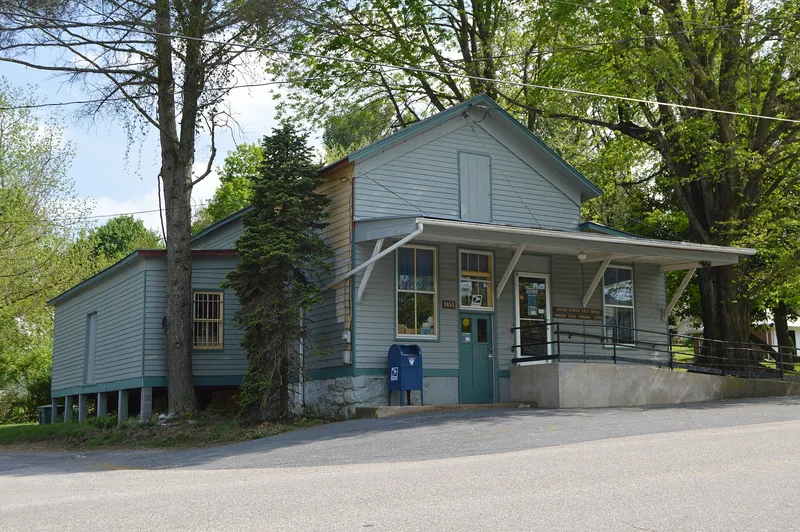
Singers Glen is a village of about 69 buildings spread along Route 613 in a mountain hollow in western Rockingham County, Virginia. It began in the early nineteenth century around the farm of Joseph Funk, who compiled and later published shape-note hymnals for rural religious groups. A post office opened in 1860 and the settlement took the name Singers Glen. The publishing firm moved to Dayton in 1878, yet the village prospered most in the following decades, and about 70 percent of its buildings predate World War I. Notable structures include the Victorian Gothic Glen Farm, Eastlake-style houses built by local craftsmen, the brick T. Funk and Sons Store of 1895, the Swank Store, two churches, and an old cemetery. The Funk and Swank families shaped local commerce and politics, and the village was briefly incorporated in 1894. Growth stopped after World War I, leaving a well-preserved late nineteenth-century community.
Significance in brief: The district is a small, well-preserved late nineteenth-century village that grew up around Joseph Funk's shape-note hymnal publishing, which began in the early 1800s. Its greatest prosperity came after the publishing firm left in 1878, and its turn-of-the-century architecture makes it one of the Shenandoah Valley's most picturesque villages. It also reflects the Funk and Swank families' commercial and political influence.
Machine-generated summary. This summary was generated by a language model from the official nomination document and has not been reviewed line by line by an editor. It may contain errors. Check the source document before relying on any detail. Source: nomination document (PDF) · National Archives catalog entry. NRHP reference 78003043, listed January 20, 1978. Summary generated October 2026 (model claude-sonnet-5-5, prompt v1.0-2026-10-29, confidence medium).
Key facts
| Address | Jct. of VA 613 and VA 712, Singers Glen |
|---|---|
| County | Rockingham County |
| Listed | January 20, 1978 |
| Reference number | 78003043 |
| Resource type | District |
| Period of significance | 1800-1899 |
| Architect / builder | Local craftsmen Edwin Funk (carpenter), Harry Funk (plasterer) and Fred Baer (mason) built several of the houses |
| Architectural style | Late Victorian Gothic, Eastlake, provincial Victorian and Perpendicular Gothic; vernacular frame and brick village buildings |
| Areas of significance | Architecture, Religion, Performing Arts |
| Level of significance | State |
| Status (as stated in the nomination) | Condition marked good and altered; the village retains most of its original buildings, with a few modern intrusions such as a gasoline station and mid-twentieth-century houses. |
| Acreage | 125 |
| Coordinates | 38.52883, -78.91445 (NPS GIS) |
What listing means for this property
This is a historic district. Buildings within its boundary are either contributing (they add to the district's significance) or non-contributing. Owners of contributing income-producing buildings can claim the 20% federal rehabilitation tax credit; homeowners should look at state credits. National Register districts impose no design review by themselves; a local historic district ordinance, if one exists, does (the difference explained).
General information, not legal or tax advice. Rules change; confirm with your State Historic Preservation Office or a qualified adviser.
Sources and further reading
- National Park Service, National Register of Historic Places database (snapshot May 2026), reference 78003043.
- Nomination form (PDF, National Archives) — catalog entry
- Wikipedia article (used for cross-checking only; text not reproduced here)
- Wikidata Q15277873
- This listing as JSON
Last updated October 2026. Found an error? See the editorial policy for how to report it.