Skyline Drive Historic District

Why it's listed
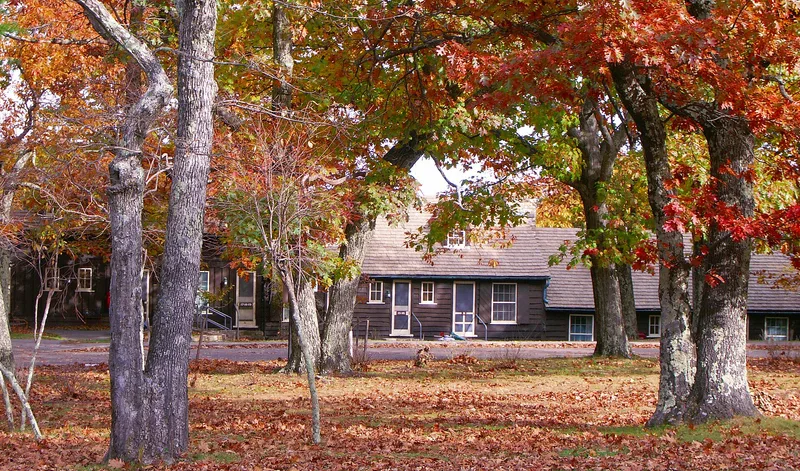
Skyline Drive is a 105.5-mile mountaintop road following the crest of the Blue Ridge in Shenandoah National Park, Virginia, together with its overlooks, waysides, picnic grounds, campgrounds and lodge areas. Proposed in 1924, it was begun in 1931 and finished in phases, with the central section opening in 1934, the northern in 1936 and the southern in 1939. It was built with drought relief funds and New Deal programs, employing about four thousand laborers hired for road construction and more than ten thousand Civilian Conservation Corps enrollees. Designers adapted National Park Service naturalistic principles, developed for western parks, to the Appalachians: curving alignments, planted and rounded slopes, stone guardwalls and frequent scenic overlooks. Rustic lodges such as Big Meadows, Dickey Ridge and Lewis Mountain show the style in architecture. The drive and its main developed areas have changed relatively little since the early 1940s, and it is recognized for its role in conservation, recreation, landscape architecture and Depression-era relief.
Significance in brief: The nomination argues that the drive played a pivotal role in the history of the national park system, park road design and New Deal employment relief. It is an exemplary expression of National Park Service naturalistic landscape design and rustic architecture, and it showcases the work of the Civilian Conservation Corps. It was listed at the national level of significance.
Machine-generated summary. This summary was generated by a language model from the official nomination document and has not been reviewed line by line by an editor. It may contain errors. Check the source document before relying on any detail. Source: nomination document (PDF) · National Archives catalog entry. NRHP reference 97000375, listed April 28, 1997. Summary generated October 2026 (model claude-sonnet-5-5, prompt v1.0-2026-10-29, confidence medium).
Key facts
| Address | Shenandoah National Park, from the N entrance station at Front Royal to the S entrance station at Rockfish Gap, Luray |
|---|---|
| County | Page County |
| Listed | April 28, 1997 |
| Reference number | 97000375 |
| Resource type | District |
| Period of significance | to 1952 (the form states the period extends to 1952; the start date is not given in the text provided) |
| Architect / builder | National Park Service landscape architects (Harvey P. Benson supervising) with the Bureau of Public Roads and the Civilian Conservation Corps; concessionaire Virginia Sky-line Company built lodges and waysides |
| Architectural style | National Park Service naturalistic landscape design; National Park Service rustic architecture |
| Criteria |
|
| Areas of significance | Community Planning and Development, Conservation, Engineering, Architecture, Politics/Government, Entertainment/Recreation, Social History, Transportation, Landscape Architecture |
| Level of significance | National |
| National Historic Landmark | Yes, designated October 6, 2008 |
| Status (as stated in the nomination) | Still in use as the park's main access road, with overlooks, recreational facilities, waysides and ranger stations retaining a high degree of historic integrity. |
| Acreage | 3190 |
| Coordinates | 38.46993, -78.45782 (NPS GIS) |
What listing means for this property
This is a historic district. Buildings within its boundary are either contributing (they add to the district's significance) or non-contributing. Owners of contributing income-producing buildings can claim the 20% federal rehabilitation tax credit; homeowners should look at state credits. National Register districts impose no design review by themselves; a local historic district ordinance, if one exists, does (the difference explained).
General information, not legal or tax advice. Rules change; confirm with your State Historic Preservation Office or a qualified adviser.
Sources and further reading
- National Park Service, National Register of Historic Places database (snapshot May 2026), reference 97000375.
- Nomination form (PDF, National Archives) — catalog entry
- Wikidata Q97403318
- This listing as JSON
Last updated October 2026. Found an error? See the editorial policy for how to report it.