Camp Hoover
Also known as: Camp Rapidan

Why it's listed
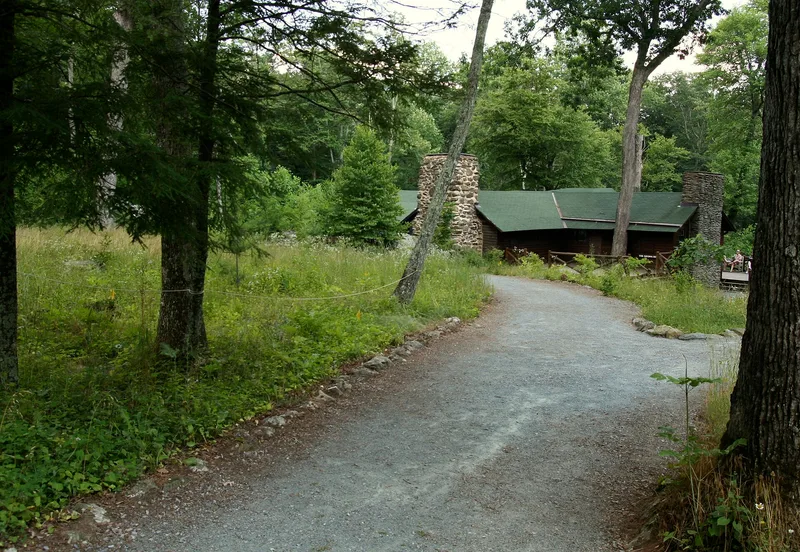
Camp Hoover is a secluded mountain retreat among hemlocks at the base of Fork Mountain, at the headwaters of Virginia's Rapidan River. Herbert and Lou Henry Hoover developed it between 1929 and 1932 as a summer White House, and U.S. Marine Corps crews built its simple one-story wooden cabins, set among trees and boulders with little leveling of the land. Of 13 original buildings, three remain: The President, The Prime Minister and The Creel. The surrounding landscape also survives in part, including stone bridges, man-made trout pools, a tiered stone fountain from Lou Henry Hoover's rock garden, a large fieldstone fireplace used for meetings, stone-lined trails and the Hemlock Run waterway. The Prime Minister cabin was built for naval disarmament talks with British Prime Minister Ramsay MacDonald. Most other buildings were demolished in 1960 after Boy Scout use. The camp lies within Shenandoah National Park and is kept as a presidential weekend retreat.
Significance in brief: The camp served as a "summer White House" during the Hoover Administration (1929-1933). Three of its 13 original cabins survive, along with stone bridges, trout pools, a fountain, a large outdoor fireplace and trails that show the camp's original function and appearance. The nomination ties these resources to the camp's role as a presidential retreat and a site of diplomatic discussion.
Machine-generated summary. This summary was generated by a language model from the official nomination document and has not been reviewed line by line by an editor. It may contain errors. Check the source document before relying on any detail. Source: nomination document (PDF) · National Archives catalog entry. NRHP reference 88001825, listed June 7, 1988. Summary generated October 2026 (model claude-sonnet-5-5, prompt v1.0-2026-10-29, confidence medium).
Key facts
| Address | Shenandoah National Park, Graves Mill |
|---|---|
| County | Madison County |
| Listed | June 7, 1988 |
| Reference number | 88001825 |
| Resource type | District |
| Architect / builder | Built by U.S. Marine Corps crews; William J. Wagner, AIA, analyzed the cabin alterations |
| Architectural style | Rustic Camp |
| Areas of significance | Politics/Government |
| Level of significance | National |
| National Historic Landmark | Yes, designated June 7, 1988 |
| Status (as stated in the nomination) | Three original cabins survive and are maintained by the National Park Service as a weekend retreat for the President; some facilities are rented to Cabinet and Congress members, and the grounds are open to park users with interpretive signs. |
| Acreage | 106 |
| Coordinates | 38.49152, -78.42164 (NPS GIS) |
What listing means for this property
This is a historic district. Buildings within its boundary are either contributing (they add to the district's significance) or non-contributing. Owners of contributing income-producing buildings can claim the 20% federal rehabilitation tax credit; homeowners should look at state credits. National Register districts impose no design review by themselves; a local historic district ordinance, if one exists, does (the difference explained).
General information, not legal or tax advice. Rules change; confirm with your State Historic Preservation Office or a qualified adviser.
Sources and further reading
- National Park Service, National Register of Historic Places database (snapshot May 2026), reference 88001825.
- Nomination form (PDF, National Archives) — catalog entry
- Wikipedia article (used for cross-checking only; text not reproduced here)
- Wikidata Q7294243
- This listing as JSON
Last updated October 2026. Found an error? See the editorial policy for how to report it.